


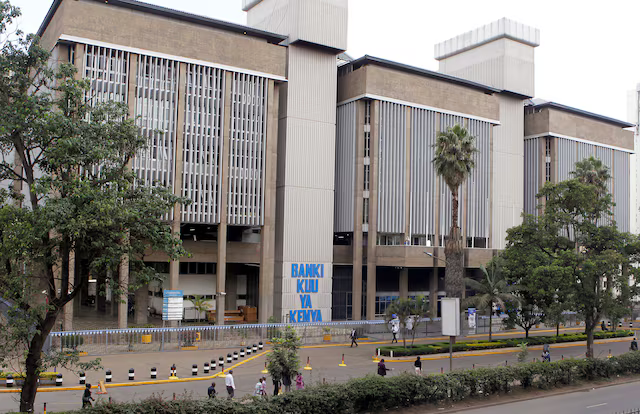
In a definitive move to bolster economic expansion, the Central Bank of Kenya (CBK) enacted a ninth consecutive reduction of its benchmark lending rate – the Central Bank Rate (CBR) on Tuesday, 9th December 2025, thereby instituting the longest monetary policy easing cycle in the institution’s history. This decision was propelled by a conducive domestic environment characterized by stable inflation and substantial external buffers, which collectively afforded policymakers the latitude to prioritize growth stimulation.
The Monetary Policy Committee (MPC) agreed to a cut of 25 basis points, lowering the CBR from 9.25% to 9.00%. This action extends a strategic cycle of reductions designed to stimulate credit extension to the private sector, an objective deemed sustainable while inflationary pressures remain comfortably anchored within the official target band of 5.0% ± 2.5 percentage points.

The domestic inflationary backdrop provides substantial justification for this accommodative stance. Overall inflation moderated to 4.5% in November, below the midpoint of the government’s target range. This was primarily driven by a decline in core inflation which excludes volatile food and energy prices to 2.3%, largely attributable to reduced costs for processed food items such as maize flour and sugar.
Although non-food, non-fuel (NFNF) inflation edged higher to 10.1% due to elevated prices for vegetables like tomatoes and onions, the committee anticipates headline inflation will persist near the target midpoint in the immediate term, a projection that supports the CBK’s growth focused stance.
CBK Cites Strong Reserves, Shilling Stability as Key to Policy Enablers
Concurrently, pronounced stability in the foreign exchange market and robust external reserves have significantly bolstered the policy space. The Kenyan shilling has maintained a firm position below the 130 level against the US dollar for several consecutive weeks, a stability the MPC cited as a pivotal factor enabling sustained policy support. Furthermore, the central bank’s foreign exchange reserves ascended to USD 12.092 billion in December, equivalent to 5.25 months of import cover and representing the highest buffer observed in recent months.

The committee noted that the current account deficit, while having widened modestly to 2.2% of GDP in the twelve months to October, remains manageable and is projected to stabilize around 2.3% through 2025 and 2026. On the growth front, recent data indicate a broadening recovery. Real GDP expanded by 4.9% in the first half of 2025, prompting the CBK to revise its full-year growth forecast upward to 5.2%, with a further acceleration to 5.5% anticipated in 2026.
This optimistic outlook is underpinned by resilience in the agricultural and services sectors, coupled with a discernible recovery in industrial activity. The accommodative monetary policy is already transmitting to the real economy, as evidenced by CBK data showing a year-on-year expansion in private sector credit growth to 6.3% in November 2025, up from 5.9% in October 2025.

This marks a sustained recovery from the negative growth witnessed earlier in the year. Correspondingly, average commercial bank lending rates have declined to 14.9% in November 2025 from 17.2% a year prior, and credit quality has shown improvement, with the ratio of non-performing loans receding to 16.5% in November 2025 from 16.7% in October 2025.
A critical element of the CBK’s committee’s deliberation involved the transition to a revised Risk-Based Credit Pricing Model (RBCPM) for the banking sector, slated for full implementation by March 2026. This structural reform is anticipated to enhance the transmission mechanism of monetary policy, ensuring that reductions in the CBR translate more directly and transparently into lower borrowing costs for businesses and households. The shift is viewed as instrumental for maximizing the efficacy of the CBK’s current easing cycle.
Salient Developments in the Macroeconomic Space
Private sector credit attained a record KES 4.15 trillion in November, signaling a definitive shift in the credit cycle. In capital markets, corporate initiatives such as Safaricom’s inaugural green bond witnessed remarkable oversubscription, reflecting robust investor appetite for sustainable instruments. Concurrently, the mobile money ecosystem is evolving, with Airtel Money surpassing a 10% market share for the first time as M-Pesa’s dominance gradually recedes.
Equity markets exhibited volatility, characterized by exceptional rallies in specific counters like Uchumi and Kakuzi contrasted with net foreign investor outflows and a broader index decline. Meanwhile, infrastructure sectors such as fixed broadband and electricity generation posted steady growth, underscoring the underlying diversification and expansion of the Kenyan economy.
Also Read: Stanbic and Safaricom sign USD 138 Million Partnership to Expand Network Access


