


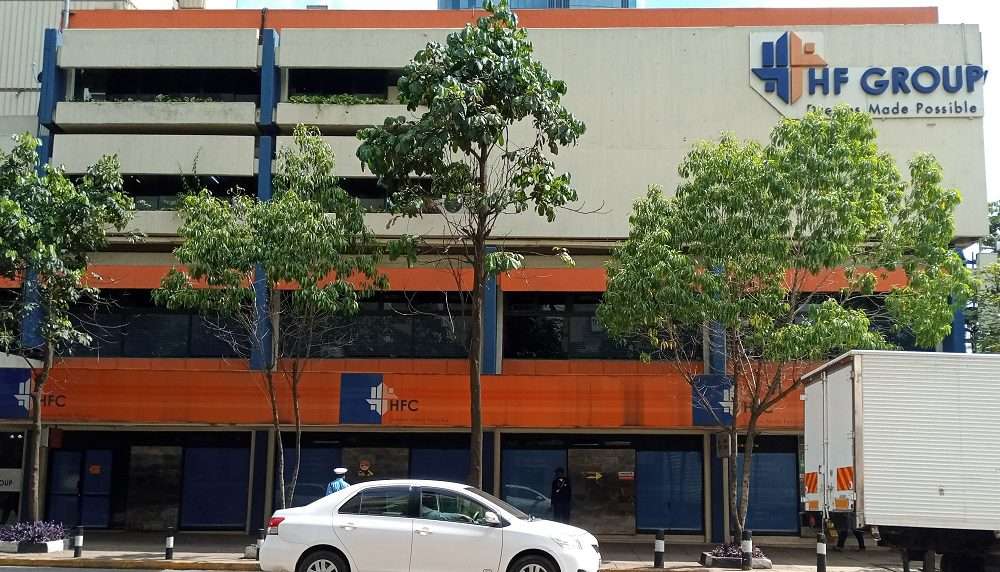
HF Group’s latest earnings release is more than just a set of impressive numbers—it is a statement of intent. Posting a profit before tax of KES 1.14 billion, a staggering 265% growth compared to the same period in 2024, the Group has positioned itself as one of the most resilient and adaptive players in Kenya’s financial services industry.
For years, HF Group was seen primarily as a mortgage lender, vulnerable to interest rate cycles and housing market fluctuations. Today, however, the company’s diversification strategy is paying off. Subsidiaries across the Group are contributing meaningfully to profitability, proving that HF is no longer a one-dimensional institution but a multi-engine financial powerhouse.
The numbers tell a compelling story. Assets grew by 22% to KES 80 billion, deposits rose by 20% to KES 55 billion, and operating income jumped 52%. Non-funded income, often the Achilles’ heel of Kenyan banks, surged 29%, while net interest income climbed 63%. These figures are not just incremental gains—they represent a fundamental shift in HF’s earnings profile.
HF Group’s Balance Sheet Growth
Equally important is the Group’s balance sheet strength. A liquidity ratio of 54.2%—more than double the regulatory minimum—provides a cushion against shocks, while a capital-to-risk-weighted assets ratio of 21.9% signals robust capitalization. In a market where many institutions hover dangerously close to regulatory thresholds, HF’s capital adequacy is a competitive advantage.
CEO Robert Kibaara’s remarks underscore a broader vision: customer-centricity and digitization. By reducing its base lending rate twice this year, HF has demonstrated sensitivity to customer needs in a challenging macroeconomic environment. This is not just about profitability—it is about relevance. Banks that fail to align with customer realities risk irrelevance, and HF seems determined to avoid that fate.
The timing of these results is symbolic. As HF celebrates its 60th anniversary, it has been added to the Morgan Stanley Frontier Markets Small Cap Index—a recognition that places it firmly on the radar of global investors. Its banking subsidiary, HFC, has also been elevated to Tier II status, cementing its place among Kenya’s mid-sized but ambitious banks.
The broader implication is clear: HF Group is no longer playing defense. It is scaling, diversifying, and positioning itself as a growth story in a sector often defined by caution. For investors, regulators, and customers alike, HF’s trajectory offers a case study in how strategic reinvention can transform legacy institutions into modern financial leaders.

The challenge now is sustainability. Can HF maintain this momentum in an environment of rising credit risks, inflationary pressures, and regulatory scrutiny? If the current trajectory holds, HF Group may well emerge as one of the defining success stories of Kenya’s financial sector in the coming decade.
Also Read: Analyst: HF Group’s Growth Momentum Signals a Well-Executed Transformation Strategy


