


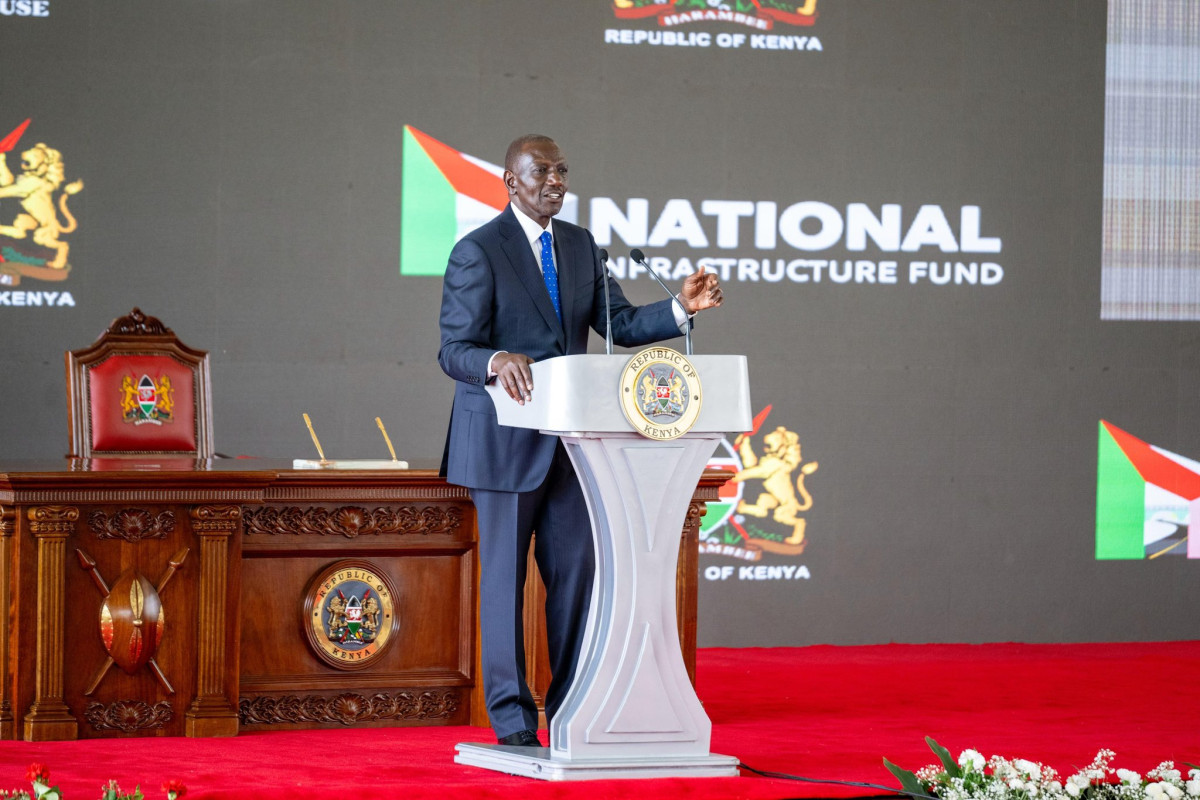
President William Ruto has officially appointed the Governing Council of the newly established National Infrastructure Fund (NIF). This move follows the enactment of the National Infrastructure Fund Act, 2026, and marks the operationalization of a vehicle intended to mobilize nearly KES 5 trillion for Kenya’s long-term development.
NIF Governing Council: Key Appointments
The council is a blend of top state officials and seasoned independent professionals. Key members include:
• Chairperson: John Mbadi (Cabinet Secretary for the National Treasury).
• Statutory Members: Dr. Kamau Thugge (CBK Governor) and Hon. Dorcas Oduor (Attorney-General).
• Independent Council Members:
o Prof. Benedict Oramah: Former President of Afreximbank.
o Paul Russo: CEO of KCB Group PLC.
o Faith Boinett: Chairperson of Kenya Pipeline Company.
o Richard Etemesi: Chairperson of Liberty Holdings with over 30 years of global financial experience.
The law requires the independent members to have at least 10 years of leadership experience in finance, law, or engineering.
The Governing Council of the National Infrastructure Fund (NIF) functions as a high-level oversight organ responsible for providing strategic direction and safeguarding the Fund’s assets. Its primary mandate includes managing the Fund’s investment policy while ensuring strict transparency and accountability in the use of funds.
Furthermore, the council is tasked with overseeing the competitive recruitment of the Fund’s Board of Directors, which in turn recruits the Chief Executive Officer to manage day-to-day activities. This governance structure is specifically designed to maintain a clear separation between high-level policy oversight and the daily operational management handled by the independent board.
Kenya to Leverage NIF for Infrastructure Development
The NIF marks a fundamental shift in Kenya’s development strategy, moving away from debt-heavy borrowing toward a model designed to attract substantial private capital. With a vision to mobilize nearly KES 5 trillion, the fund aims to channel KES 400 billion annually into the economy to accelerate the development of critical national projects.
This performance-oriented structure places the NIF among the most ambitious sovereign investment vehicles in Africa, aligning it with high-tier regional development funds.

The NIF intends to mobilize KES 5 trillion to finance strategic projects like highways, railways, and digital infrastructure while reducing Kenya’s dependency on public debt. The Act includes strict safeguards, including mandatory National Assembly approval of investment policies and hefty fines or jail terms for the misuse of funds.
The governing council will provide oversight, while an independent Board of Directors and a competitively recruited CEO will handle daily execution. With the Council now in place, the next step is the recruitment of the Board and the rollout of the Fund’s first five-year investment pipeline.
The recent IPO by Kenya Pipeline Company (NSE: KPC) attracted KES 112B in subscriptions against KES 106B targeted. During the assent of the National Infrastructure Fund at State House, Nairobi, on 9th March 2026, Kenya’s President William Ruto noted that KES 15 billion – KES 20 billion of the KES 106B IPO proceeds were earmarked for deployment to the NIF to serve as seed capital for the fund.
Also read: Kenya Pipeline IPO Surpasses Target, Records 105.7% Subscription
Ivan Lewa by Ivan Lewain Corporate NewsReading Time: 2 mins read
Get The Trading Room on your feed — WhatsApp · Telegram · X · LinkedIn


