


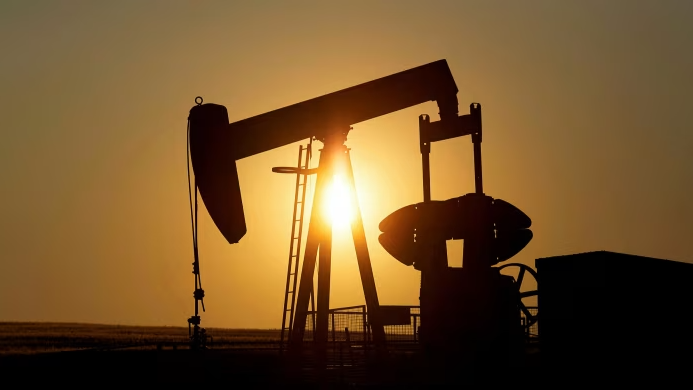
On Thursday, US WTI Crude oil futures settled more than 11 percent higher to the highest level in four years while Brent crude surged nearly 8 percent higher amid volatile trading, as market participants grew increasingly concerned over potential prolonged disruptions to global oil supply. The sharp price movements followed President Donald Trump’s announcement that the United States would continue its military operations against Iran. Specifically, Brent crude futures closed at USD 109.03 per barrel, marking a gain of USD 7.8. Meanwhile, U.S. West Texas Intermediate (WTI) crude futures rose by USD 11.42, to settle at USD 111.54 per barrel reflecting their largest absolute daily price increase since 2020. Despite these substantial gains, both benchmarks remained below the nearly USD 120 per barrel highs reached earlier in the conflict.
President Trump stated that military operations would be intensified, though he did not provide a timeline for ending hostilities nor offer details on any potential steps that could lead to the reopening of the Strait of Hormuz. He warned of severe military action in the coming weeks, vowing to inflict significant damage. In response, an Iranian foreign ministry official indicated that Iran is drafting a protocol with Oman to monitor traffic through the strait. Iran has effectively closed this narrow 48-kilometre-wide waterway as retaliation for U.S.-Israeli strikes that began on February 28. With energy prices soaring, reopening the strait has become a critical priority for governments worldwide.
Lorie Logan, President of the Federal Reserve Bank of Dallas, noted that a swift resolution to the conflict might result in a relatively moderate economic impact, though she added that the economic outlook remains uncertain due to the crisis. She also stated that the United States possesses some buffers against the war’s effects. Looking ahead, Citi projected that Brent crude prices could average USD 95 per barrel in a base-case scenario and USD 130 per barrel in a bullish scenario during the second half of the year.
J.P. Morgan also added that oil prices could climb to between USD 120 and USD 130 per barrel in the near term, and exceed USD 150 if the strait remains closed into mid-May. Meanwhile, energy services firm Baker Hughes reported that the U.S. oil rig count which is an indicator of future output, rose by two to 411 this week, signaling intent to increase output. While higher prices for future delivery have prompted producers to consider adding more rigs, they have cautioned that they would need to see sustained higher prices before doing so.

Oil Output Adjustments Weighed by OPEC+ as Russian Export Capacity Drops
Regarding diplomatic efforts, Britain is hosting a virtual meeting of approximately 40 countries to discuss options for reopening the Strait of Hormuz, though the United States is not expected to attend. Separately, sources indicated that OPEC+ is likely to consider a further oil output increase on Sunday 5th March 2026 when eight members meet, which would position member countries to add more barrels should the strait reopen, though a meaningful supply increase before then is unlikely.
In Russia, sources report that Ukrainian strikes on port infrastructure, pipelines, and refineries have reduced the country’s export capability by one million barrels per day, which is equivalent to one-fifth of its total capacity, setting the stage for impending production cuts. Finally, the head of the International Energy Agency warned that supply disruptions would begin to affect Europe’s economy in April, after the region had previously been shielded by cargoes contracted before the start of the conflict.

Also Read: MPs Bet on Kenya Airways as Strategic Investor Hunt Intensifies
Get The Trading Room on your feed — WhatsApp · Telegram · X · LinkedIn


