


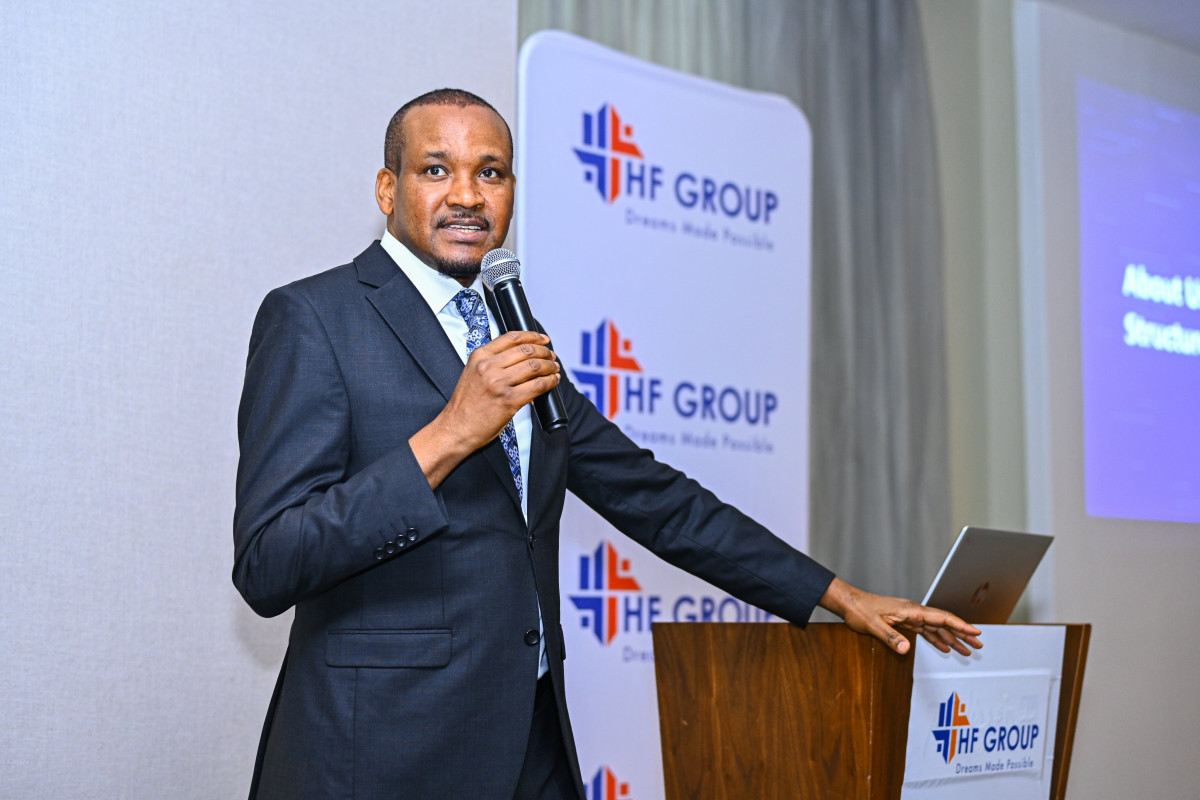
HF Group Plc has done something few Kenyan banks have managed in recent memory: it has made a genuine, audited, multi-year comeback. The full-year 2025 results, released last week, are not just good; they are the best the institution has posted since before 2016, capping a four-year journey from near-insolvency to a position of growing strength on the Nairobi Securities Exchange.
Profit before tax rose to KES 1.61 billion, a 250% jump from KES 460 million in 2024. After tax, the Group took home KES 1.42 billion, a 171% year-on-year increase. CEO Robert Kibaara, who has anchored the transformation narrative since taking charge, was direct at the results briefing: the strategy is working.
The numbers support the confidence. Net interest income at the Group level grew 64% to KES 4.36 billion, driven partly by a 79% surge in income from government securities to KES 2.83 billion, but also by a 130-basis-point reduction in the cost of customer deposits even as the deposit base itself expanded 19% to KES 56.9 billion. That combination, more deposits, cheaper, is the hallmark of a bank that has rebuilt customer trust.

Perhaps the most underappreciated milestone is on capital. HF Group’s core capital has now crossed KES 10 billion, putting it fully compliant with the CBK’s revised regulatory capital requirements four years ahead of the 2029 deadline. Kibaara put it plainly: the Group is positioned for sustainable long-term growth, with its focus now on scaling digital platforms and deepening financial solutions. With a liquidity ratio of 51.5%, more than double the regulatory floor of 20%, the balance sheet is in the healthiest shape it has been in years.
HF Group on the NSE — The Long Journey
Listed as the Housing Finance Company of Kenya (HFCK) on the Nairobi Securities Exchange in 1992, HF Group is one of the longest-standing stocks on the bourse. The stock’s story is one of dramatic peaks, a prolonged collapse, and a recent, hard-earned revival.
At its 2006 peak, HFCK traded at KES 55.68, a level that now feels like ancient history. The following decade brought structural challenges: a slowing mortgage market, rising NPLs, aggressive competition from full-service commercial banks, and a cost structure that never quite caught up with a shrinking revenue base. By early 2021, the stock had fallen to KES 2.38, an all-time low. Long-term shareholders had lost over 95% of their peak value.

The turning point came in late 2024. HF Group launched the rights issue at KES 4 at a 2:1 ratio (two new shares for every one held), and the market responded with conviction. The offer was oversubscribed by 38%, raising KES 6 billion in gross proceeds and landing HF Group a place in the MSCI Index. From the KES 4 rights price, the stock ran to a recent high of KES 11.60, a gain of 190% in roughly 12 months. On the day of the FY2025 results release, HFCK was trading at KES 9.08; still more than double the rights issue price, and up approximately 127% from its 2021 lows.

For NSE investors who held through the dark years or who entered at the rights issue price, the story is vindication. For those watching from the sidelines, HF Group now presents a fundamentally different institution from the one that was haemorrhaging losses four years ago, leaner, better capitalised, and for the first time in years, genuinely growing its earnings base rather than defending it. The next chapter, Kibaara says, is digital and regional. If the last four years are any guide, the market would be wise not to underestimate him.


