• Home
  • Business News
  • Weekly Reviews
  • Market Reports
Wednesday, February 4, 2026
  • Login
  • Home
  • Business News
  • Weekly Reviews
  • Market Reports
  • Global Markets
  • Commodities
  • Corporate News
No Result
View All Result
The Trading Room
  • Home
  • Business News
  • Weekly Reviews
  • Market Reports
  • Global Markets
  • Commodities
  • Corporate News
No Result
View All Result
The Trading Room
No Result
View All Result
Home Business News

KOKO Networks’ Green Dream Deferred in Kenya as It Shuts Down, Laying off 700 Employees

Faith Kemboi by Faith Kemboi
in Business News
Reading Time: 2 mins read
A A
0
KOKO
Share on FacebookShare on Twitter

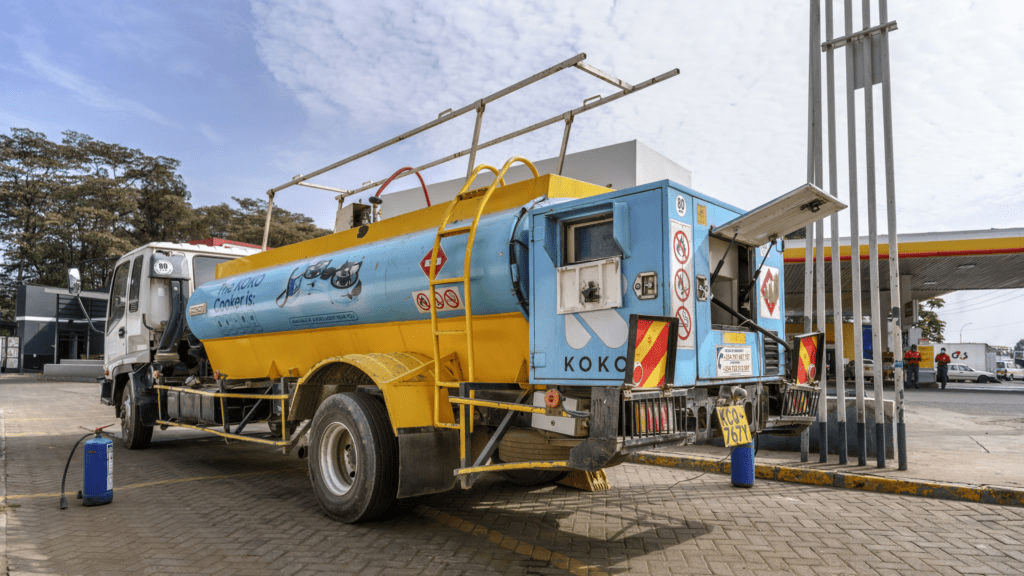
In late January 2026, KOKO Networks, once hailed as a global model for climate-focused innovation, abruptly shut down its operations. The company’s collapse marks a significant setback for Kenya’s environmental goals and the fight against indoor air pollution. The fallout has seen 700 employees laid off, and more than 1.5 million households – approximately 11% of Kenya’s 13.9 million households, return to dirtier fuels.

RELATED POSTS

Fitch Affirms Kenya Credit Ratings at ‘B-‘ while Moody’s Upgrades to B3 from Caa1

NSE Market Report: Indices in the Red as Manufacturers Dominate Top 5 Losing Counters

Kenya’s Annual Inflation Eases to 4.4% in January 2026

KOKO Networks was founded in 2013 by Greg Murray with a mission to combat the environmental and health crises caused by charcoal and kerosene use. In many African countries, charcoal is a primary fuel source, contributing to massive deforestation which is estimated at 2 million hectares annually and causing millions of deaths due to indoor air pollution.

KOKO came in with a solution that was technology-driven distribution platform for bioethanol. By installing over 3,000 automated KOKO Points (fuel ATMs) in neighborhood shops, the company allowed families to buy small, affordable amounts of clean-burning fuel using reusable bottles. This eliminated the high upfront cost of large gas cylinders, making clean energy accessible to low-income urban households.

Carbon Credits, KOKO’s Achilles Heel

Its success relied on a unique subsidy structure which were funded by selling carbon credits. Because KOKO’s customers were switching away from charcoal, the company could measure the avoided carbon dioxide and methane emissions, package them as credits, and sell them to international companies in compliance markets. These credits, often certified by the Gold Standard, were particularly valuable to the airline industry, fetching prices as high as $20 per credit.

By 2024 and 2025, KOKO appeared to be a thriving enterprise. The company was operationally profitable and had raised more than US$100 million in debt and equity from major international investors.

In March 2025, the World Bank’s Multilateral Investment Guarantee Agency (MIGA) issued a guarantee worth US$179.6 million (KES 23.2 billion) to support KOKO’s expansion. This political risk insurance was designed to cover potential government breaches of contract or actions affecting carbon-credit sales. At that time, KOKO had ambitious plans to serve 3 million customers by late 2027.

KOKO

Buy JNews
ADVERTISEMENT

The company’s sudden downfall was triggered by a dispute with the Kenyan government over a Letter of Authorization (LOA). Under Article 6 of the Paris Agreement, international carbon credit sales require host government approval to prevent double counting of emission reductions.

Despite a 2024 investment framework agreement, the Kenyan government reportedly refused to issue the necessary LOAs. Without this authorization, KOKO could not sell its credits in high-value international compliance markets, making its subsidized business model financially unsustainable.

koko

On January 31, 2026, following emergency board meetings, KOKO filed for administration with PwC partners Muniu Thoiti and George Weru appointed as joint administrators of KOKO Networks limited and KOKO Global services on February 1, 2026. The administrators are calling for submission of any claim against the company in 14 days.

This collapse has left 1.5 million households at risk of returning to toxic fuels like charcoal and kerosene, as traditional liquefied petroleum gas (LPG) remains too expensive for the demography it served. The shutdown serves as an example of the risks facing green-tech startups when innovative business models collide with shifting government policy and regulatory uncertainty.

Also read: Victoria Commercial Bank Secures USD 7.5 Million Green Financing Facility to Support SMEs in Transition to a Low-Carbon Economy

Post Views: 1
Previous Post

Kakuzi Rolls Out Loose-Leaf Tea Brand as Part of Market Expansion Strategy

Faith Kemboi

Faith Kemboi

Related Posts

Ratings
Business News

Fitch Affirms Kenya Credit Ratings at ‘B-‘ while Moody’s Upgrades to B3 from Caa1

by Tim Mwatela
NSE
Business News

NSE Market Report: Indices in the Red as Manufacturers Dominate Top 5 Losing Counters

by Tim Mwatela
Inflation
Business News

Kenya’s Annual Inflation Eases to 4.4% in January 2026

by Faith Kemboi
Ratings
Business News

Kenya’s External Debt Repayment Window Narrows as Average Maturity Shortens

by Ruth Nelima
Advertisement Banner Advertisement Banner Advertisement Banner
ADVERTISEMENT

Most Viewed Posts

  • Tea Farmers Set to Receive Kes 28 Billion as Final Bonus Payment (4,538)
  • Hilda Njeru Takes over at CDSC (3,199)
  • CDSC to suspend some services for a week as systems upgrade now complete. (2,785)
  • Bitcoin Rallies 1.5% as El Salvador Adopts the Cryptocurrency as Legal Tender. (2,746)
  • 4 Things You Can Do With the Cashlet App to Achieve Your Financial Goals (2,656)

Follow Twitter

About Us

Follow Us

Popular Tag

Africa Asian - Pacific Stocks Asian Stock Markets Australian Stocks Bitcoin Bonds Kenya Bonds Trading in Kenya Brent Brent Crude Capital Markets Authority Central Bank of Kenya Corona Virus Pandemic Crude Oil Cryptocurrencies Derivatives NSE Derivatives Trading in Kenya Dow Jones Industrial Average European Stock Markets Global Economy Global Markets Gold Hang Seng Index Investing in Kenya Jakarta Stock Exchange Kenya Bankers Association Kenya Economy Kospi index MSCI Index Nairobi Securities Exchange NASDAQ New York Stock Exchange Nikkei N225 NSE Oil Futures S&P 500 Index Safaricom Plc Shanghai Composite Shenzhen component spotlight Stock Market Report Stock Market Review U.S. Stock markets US oil Wall Street WTI Oil Index

Recent News

KOKO

KOKO Networks’ Green Dream Deferred in Kenya as It Shuts Down, Laying off 700 Employees

Kakuzi

Kakuzi Rolls Out Loose-Leaf Tea Brand as Part of Market Expansion Strategy

  • About
  • Advertise
  • Privacy & Policy
  • Contact

© 2025 The Trading Room Limited.

Welcome Back!

Login to your account below

Forgotten Password?

Retrieve your password

Please enter your username or email address to reset your password.

Log In
TSLA
$421.96 0.01%
GME
$24.52 5.15%
MSFT
$411.21 2.87%
AAPL
$269.48 0.18%
AMC
$1.38 1.43%
ABNB
$122.08 7.03%
GOOGL
$339.71 1.16%
AMZN
$238.62 1.79%
No Result
View All Result
  • Home
  • Business News
  • Weekly Reviews
  • Market Reports

© 2025 The Trading Room Limited.

Are you sure want to unlock this post?
Unlock left : 0
Are you sure want to cancel subscription?