


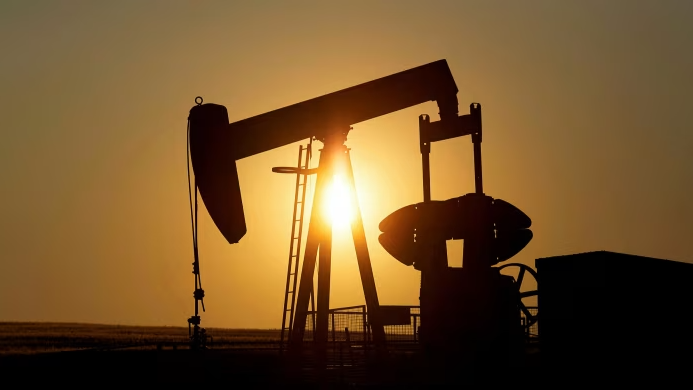
Oil prices continued in upward trajectory on Tuesday, driven by escalating rhetoric from U.S. President Donald Trump against Iran, including threats of intensified action should the country fail to reopen the Strait of Hormuz, a critical chokepoint for global oil transit.
Following the current market developments, Brent crude futures had risen by 0.5 percent, to settle at USD 110.34 per barrel, while U.S. West Texas Intermediate crude futures edged higher by 1.1 percent, to USD 113.67. Furthermore, President Trump issued a deadline of 8 p.m. EDT Tuesday for Tehran to comply with the demand to reopen the strait, warning that he would rain “hell” on Iran and that the country “could be taken out,” with further action pledged if no agreement is reached.
Oil Market on Edge as Ultimatum Deadline Nears
In response to a U.S. proposal transmitted through Pakistani mediators, Tehran rejected any immediate ceasefire, insisting that a permanent end to the broader conflict is a prerequisite. Iranian forces effectively closed the Strait of Hormuz following the onset of U.S. and Israeli attacks on February 28, disrupting a waterway that typically carries approximately 20 percent of global oil flows.
According to Tim Waterer, chief market analyst, the countdown to Trump’s ultimatum deadline is now exerting nearly as much influence on oil markets as fundamental supply-demand factors. He noted that while the potential for a ceasefire deal offers some counterweight and could prompt a relief-driven oil price decline if it gains traction, persistent supply concerns stemming from the Hormuz chokepoint and damaged energy facilities continue to underpin prices.

On Monday, sources reported that the Iran’s Revolutionary Guard Corps (IRGC) had intercepted two Qatari liquefied natural gas tankers, directing them to hold position without explanation, although shipping data indicates that vessel movements through the strait have been severely limited since the previous Thursday. Diplomats further indicated that the United Nations Security Council is expected to vote on a resolution aimed at protecting commercial shipping in the Strait of Hormuz, albeit in a significantly diluted form following opposition from China, to any authorization of force.
Military activity in the region persisted, with Syrian state television reporting explosions in Damascus and the surrounding countryside caused by Israeli interception of Iranian missiles. Separately, Saudi Arabia’s defense ministry announced on Tuesday that it had intercepted and destroyed seven ballistic missiles launched toward its Eastern Region, with debris falling near energy facilities.

The ongoing conflict has placed substantial pressure on global crude markets, evidenced by spot premiums for U.S. WTI crude oil surging to record highs as Asian and European refiners scramble to secure alternative supplies amid disrupted Middle Eastern flows. In response, Saudi Arabia’s state oil company, Aramco, raised the official selling price of its Arab Light crude oil for May delivery to Asia, setting a record premium of USD 19.50 per barrel above the Oman/Dubai benchmark.
Compounding supply concerns, Russia reported on Monday that Ukrainian drones had attacked the Caspian Pipeline Consortium’s terminal on the Black Sea which is a facility handling 1.5 percent of global oil supply, resulting in damage to loading infrastructure and storage tanks. While OPEC+ agreed on Sunday to increase oil output quotas by 206,000 barrels per day in May, the boost remains largely notional, as key members are unable to raise production due to ongoing strait closures curbing their export capacity.
Also Read: NSE Week 14 Rally: NASI Jumps 1.93% in a Strong Bullish Rebound
Get The Trading Room on your feed — WhatsApp · Telegram · X · LinkedIn


