


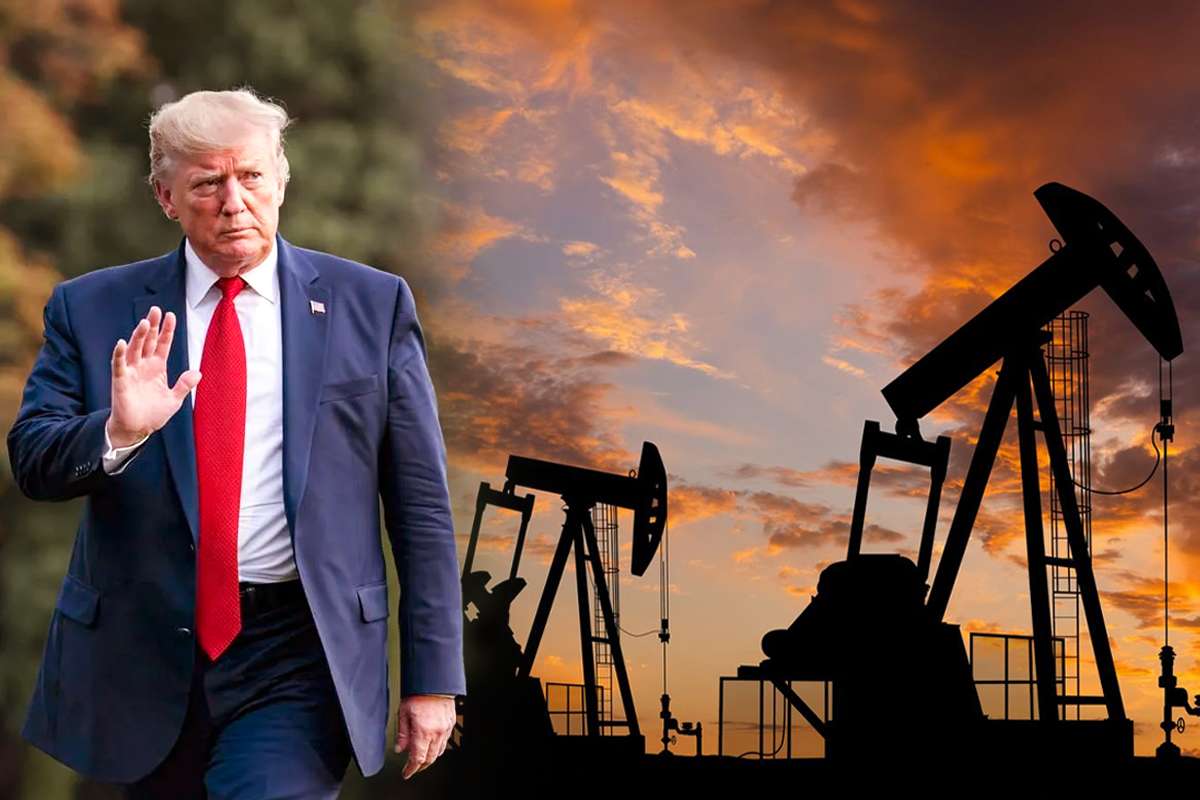
Oil markets whipsawed on Thursday morning as U.S President Donald Trump’s much-anticipated national address on the Iran war landed far more hawkish than markets had priced in, sending crude sharply higher and dashing hopes of a near-term de-escalation.
WTI gained 4.1% to $104.21 a barrel while Brent jumped 5% to $106.42 per barrel after Trump’s speech — a sharp reversal from the pre-speech sell-off that had briefly pushed both benchmarks below $100.

To put the broader move in context: Brent rose a record 94% in the first quarter while ultra-low sulphur diesel surged 101% — the largest quarterly commodity rally in recent memory. Oil prices fell below $100 ahead of Trump’s address, then jumped back above $100 as the hawkish tone of the speech became clear — underscoring just how sensitive the market is to every signal out of Washington.
Markets had been positioned for a wind-down. They got the opposite.
“Thanks to the progress we’ve made, I can say tonight that we are on track to complete all of America’s military objectives shortly — we’re going to hit them extremely hard,” Trump said. “Over the next two to three weeks, we’re going to bring them back to the Stone Age where they belong.” – Donald Trump.
Trump also threatened to strike Iran’s civilian power infrastructure if no deal is reached. “If there is no deal, we are going to hit each and every one of their electric generating plants very hard and probably simultaneously,” he said, adding that oil infrastructure remained an option too.
The Strait of Hormuz — No Guaranteed Fix to Global Oil Flow
In a development that will concern energy markets further, Trump downplayed the importance of the Strait of Hormuz during the speech, insisting the U.S. did not “need” it and signalling he was willing to end the war without restoring access — saying that job should fall to U.S. allies. The strait handles roughly 20% of global oil flows, and its continued closure remains the central driver of the global supply shock.
The IEA warning flagged earlier this week still stands. Supply disruptions are now beginning to bite into Europe’s economy in April, as cargoes contracted before the war started run out. The buffer that shielded European buyers for weeks is effectively gone.

The key question is no longer whether the U.S. exits — it’s whether the Strait of Hormuz reopens, and when. The emerging view from oil industry executives and analysts is that the economic fallout could escalate sharply if Hormuz isn’t reopened within roughly the next one to three weeks. Even then, enough damage may have been done to leave energy prices higher for longer.
For Kenya and East Africa, the implications are direct. Every dollar Brent holds above $100 tightens import costs, pressures the shilling, and pushes pump prices higher. A prolonged conflict — now the base case after Wednesday’s speech — means no near-term relief.
Also Read: Oil Prices Climb as Strait of Hormuz Disruption Intensifies


