


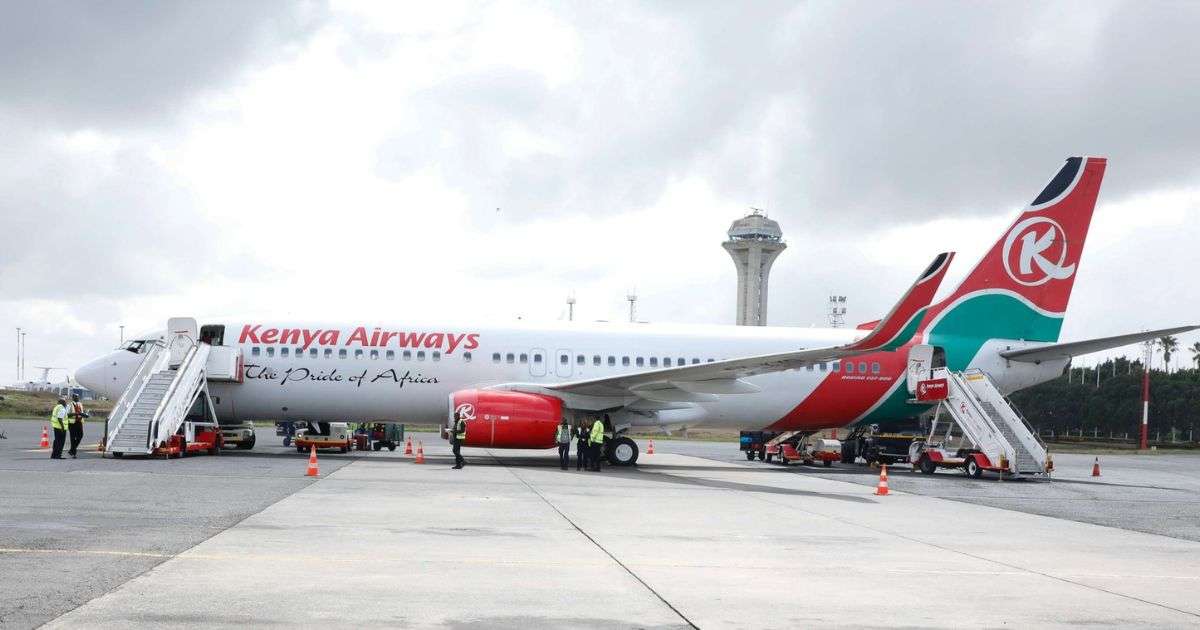
The National Treasury has increased its stake in Kenya Airways (NSE: KQ) from 48.89% to 50.1%, following the winding up of the airlines Employee Share Ownership Plan (ESOP), which held a 2.44% stake.
The airline’s ESOP shares were allocated to the scheme in 2017 as part of its restructuring, with 142.1 million shares set aside for employees.
The exit of the ESOP, which reduced the total issued shares of Kenya Airways to 5.68 billion from 5.82 billion, places the National Treasury in a stronger strategic position to facilitate the recovery of the national carrier, including ongoing efforts to secure a new strategic investor. The government is actively seeking a strategic investor to inject KES 258 billion into the airline, which has slipped back into losses and deepened its negative equity position.
Kenya Airways returns to losses in FY2025
KQ swung back to the negative with a KES 17.2 billion loss, reversing from a net profit of KES 5.4 billion in the previous year. The Nairobi-based airline attributed the weak performance to the grounding of three wide body fleet, Boeing 787-8 Dreamliners, due to global supply chain constraints and limited engine availability.
Revenue fell by 14.3% to KES 161.5 million, driven by a 13% decline passenger numbers to 4.55 million in FY2025 compared to 5.23 million a year before. Fleet ownership costs rose by 33%, mainly due to the remeasurement of leased assets in the previous year, alongside the addition of B738 aircraft.
Other operating costs surged 59%, largely driven by the stability of the Kenya Shilling during the period. Total operating costs closed at KES 167.1 billion, down 2.8% year-on-year. Kenya airways reported an operating loss of KES 5.6 billion, compared to an operating profit of KES 16.6 billion in FY2024.
The airline’s asset base expanded marginally by 2.3% to KES 183.2 billion, while total equity remained in the negative territory, worsening to KES 132 billion from KES 118.2 billion in FY2024.
Read: MPs Bet on Kenya Airways as Strategic Investor Hunt Intensifies


