


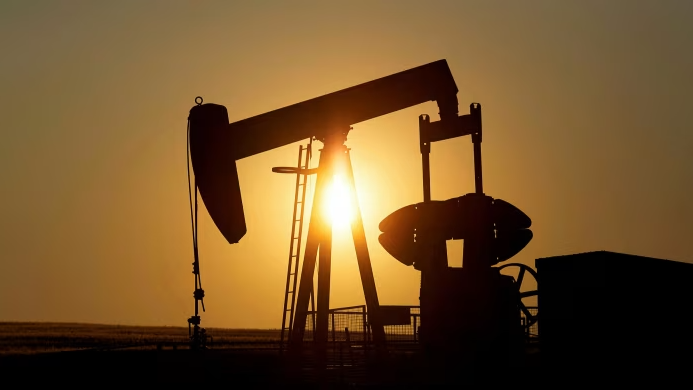
Oil prices experienced an uptick on Monday, March 30, 2026, driven by heightened geopolitical tensions following missile strikes launched by Yemen’s Iran-backed Houthis against Israel. This development was further compounded by reports that U.S. President Donald Trump has expressed intentions to seize Iran’s crude oil assets, intensifying concerns over escalating risks to energy supplies in the Middle East.
Oil Prices Surge to Multi-Week Highs
The current market dynamic, in turn, has had an effect in the crude oil trading prices. International benchmark Brent crude futures rose by 2.4 percent, reaching USD 115.27 per barrel. Meanwhile, U.S. West Texas Intermediate futures rose by 1.3 percent to trade at USD 100.89. Brent crude has now surged more than 55 percent over the course of March, positioning the benchmark for what would be its steepest monthly rise on record.
In an interview on Sunday, President Trump indicated that his preferred course of action regarding Iran would be to “take the oil,” drawing a parallel to U.S. actions in Venezuela, where Washington effectively assumed control over the country’s oil sector following the detention of its leader, Nicolás Maduro. These remarks come as the conflict involving the United States, Israel, and Iran enters its fifth week, with hostilities spreading across the region, thereby heightening risks to energy infrastructure and contributing to a rally in crude oil prices.
Additionally, Yemen’s Houthis claimed responsibility on Saturday for launching missiles at Israel, marking their first direct involvement in the ongoing U.S.-Israel war against Iran. In a statement posted on X, spokesperson of the Houthi Rebels Yahya Saree asserted that the group had targeted sensitive Israeli military installations with a barrage of missiles, framing the attack as an act of solidarity with Iranian and Hezbollah forces in Lebanon. This incident represents a significant escalation in a conflict that originated with U.S. and Israeli strikes against Iran on February 28, 2026.

Following the recent market developments, Ed Yardeni, president of Yardeni Research, observed that global equities are beginning to reflect expectations of a prolonged period of elevated oil prices and interest rates, given the growing likelihood of an extended conflict. He cautioned that a sustained blockade of the Strait of Hormuz could deepen market pullbacks and heighten recession risks.
According to Yardeni, the uncertainty surrounding the conflict which includes the potential for increased U.S. military involvement, is likely to keep market volatility high until oil flows return to normal. He emphasized that the rapid and significant movement in prices underscores the speed with which energy markets are recalibrating geopolitical risk, challenging prior efforts to stabilize oil and bond markets and reinforcing concerns over sustained disruptions in the Strait.

David Roche, a strategist at Quantum Strategy, noted that markets are increasingly factoring in the possibility of a more assertive U.S. response, potentially including ground troop deployments and an operation to seize Kharg Island, which is Iran’s principal oil export terminal through which roughly 90 percent of the country’s crude oil exports pass. Such a move would effectively deprive Iran of dollar revenues but could also provoke a full-scale escalation, with Tehran likely retaliating by targeting critical infrastructure across the Gulf.
This escalation could rapidly extend to global supply routes. Roche highlighted the vulnerability of Saudi Arabia’s East-West pipeline, which transports approximately five million barrels per day to the Red Sea, and noted that any disruption at the Bab al-Mandeb strait, an area where Yemen’s Houthis are active, could severely restrict exports. Even if alternative routes through the Suez Canal were utilized, capacity would be significantly diminished, potentially removing four to five million barrels per day from the global market.
Follow our WhatsApp channel here, our Telegram channel here, and our X page here, and our LinkedIn page here.
Also Read: Airlines Implement Fuel Surcharges as Middle East Conflict drives Global Oil Prices Higher


