• Home
  • Business News
  • Weekly Reviews
  • Market Reports
Monday, June 8, 2026
  • Login
  • Home
  • Business News
  • Weekly Reviews
  • Market Reports
  • Global Markets
  • Commodities
  • Corporate News
No Result
View All Result
The Trading Room
  • Home
  • Business News
  • Weekly Reviews
  • Market Reports
  • Global Markets
  • Commodities
  • Corporate News
No Result
View All Result
The Trading Room
No Result
View All Result
Home Business News

PMI Hits 47.7 in March as Kenyan Private Sector Weakens for the First Time in 7 Months

Faith Kemboi by Faith Kemboi
in Business News
Reading Time: 3 mins read
A A
0
STANBIC

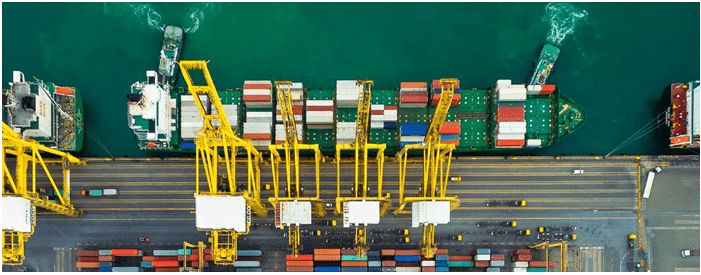
Activity at a port.

Share on FacebookShare on Twitter

Kenya’s private sector experienced a clear cooling trend in March 2026, with business conditions deteriorating for the first time since August 2025. The headline Purchasing Managers’ Index (PMI) dropped to 47.7, down from 50.4 in February, marking the fourth consecutive month the index has declined from the previous period.

RELATED POSTS

Britam Marks End of OneBritam Era with 2025 Sustainability Report

NSE Gains 0.6% as KCB, Equity and Safaricom Lift Equities

Spiro’s $215 Million Funding Boost Powers Africa’s Green Transport

The downturn was largely demand-led, as firms reported solid declines in both output and new orders after six months of continuous expansion.

Several critical factors constrained activity and led to the drop in PMI:

  • Household Pressures: Many businesses pointed to tighter household budgets, reduced cash circulation, and constrained customer spending as primary drivers for lower order volumes.
  • Geopolitical Conflict: The war in the Middle East introduced external shocks, leading to more cautious spending patterns and causing significant disruptions to international transport and customer deliveries.
  • Logistics Constraints: The conflict contributed to logistics bottlenecks and higher prices for fuel and transport, further dampening sales and operational efficiency.

Kenyan companies faced intense cost pressures at the end of the first quarter. Purchasing prices rose at their sharpest rate in just over two years, driven by higher taxes, rising fuel and transport costs, and increased shipping expenses linked to the war.

Despite these surging input costs, firms were largely unable to pass them on to consumers. Output prices rose at a much slower pace, as businesses offered discounts and mark-ups were restrained by subdued demand and heightened competition. Christopher Legilisho, Economist at Standard Bank, noted that firms chose to absorb these costs rather than risk further alienating financially stretched clients.

While output and demand struggled, the labor market showed relative stability. Employment continued to grow, though the rate of increase was the softest recorded since October 2025. This resilience was primarily driven by firms in the agrarian sector.

Outstanding business fell at the most pronounced rate in almost six years, allowing firms to catch up on workloads even as new orders slowed. Companies shifted toward holding leaner inventories to manage cash constraints, avoid “dead stocks,” and respond to the slowing order pipeline.

Buy JNews
ADVERTISEMENT
PMI Outlook and Future Strategy

Despite the current challenges, business optimism remained strong and resilient. Just over a fifth of respondents forecasted growth for the next 12 months, a sentiment that remained broadly unchanged from February.

Firms are looking toward several strategic pillars to underpin recovery. Some firms have plans to open new branches and invest in capacity and human capital. There is also increased effort in advertising and online marketing to recapture demand.

“A weaker Stanbic Kenya PMI in March reflects demand-side concerns – softer spending power constraining demand – and supply-side concerns about the war in the Middle East. Output and new orders declined in most sectors, implying that businesses expect to be constrained by the disruptions from geopolitical tensions.

Despite lower output and new orders, employment conditions held up as firms in the agrarian sector drove hiring. Backlogs declined, while there was reduced optimism about output over the next 12 months. Slowing demand meant subdued increases in quantities purchased and inventories, though delivery times improved.

Higher input prices and purchase prices were linked to concerns about taxes and the impact of the war in the Middle East on shipping costs. Output prices increases were subdued as firms declined to pass on costs to consumers in an already weak demand environment.” Christopher Legilisho, Economist at Standard Bank

Also read: Crude Oil Extends Gains as Trump Threatens Action Against Iran Over Strait of Hormuz Closure

Get The Trading Room on your feed — WhatsApp · Telegram · X · LinkedIn

Post Views: 88
Tags: inflationiranian warStanbic BankStanbic PMI
Previous Post

KBA Urges CBK to Hold CBR at 8.75% Amid Escalating Global Risks

Next Post

Zenith Bank Completes 100% Acquisition of Paramount Bank in Strategic Kenya Expansion

Faith Kemboi

Faith Kemboi

Related Posts

britam
Business News

Britam Marks End of OneBritam Era with 2025 Sustainability Report

by Faith Kemboi
NSE
Business News

NSE Gains 0.6% as KCB, Equity and Safaricom Lift Equities

by Ivan Lewa
Spiro
Business News

Spiro’s $215 Million Funding Boost Powers Africa’s Green Transport

by Faith Kemboi
paypal
Business News

PayPal Compliance Crisis: Why Kenyan Freelancers Are Being Locked Out of Their Earnings

by Faith Kemboi
Next Post
Zenith Bank

Zenith Bank Completes 100% Acquisition of Paramount Bank in Strategic Kenya Expansion

Tax

KRA Collects KES 2 Trillion in Tax in first 9 months of FY2025/2026

HF Group CEO HFCB Group CEO

OpEd: HF Group's Multi-year Comeback, a Double Investor Return on Bourse

Advertisement Banner Advertisement Banner Advertisement Banner
ADVERTISEMENT

Most Viewed Posts

  • Tea Farmers Set to Receive Kes 28 Billion as Final Bonus Payment (4,763)
  • Hilda Njeru Takes over at CDSC (3,470)
  • CDSC to suspend some services for a week as systems upgrade now complete. (3,083)
  • Safaricom Finally Launches eSIM: Here’s What You Need to Know (2,980)
  • Bitcoin Rallies 1.5% as El Salvador Adopts the Cryptocurrency as Legal Tender. (2,944)

Follow Twitter

About Us

Follow Us

Popular Tag

Africa Asian - Pacific Stocks Asian Stock Markets Australian Stocks Bitcoin Bonds Kenya Bonds Trading in Kenya Brent Brent Crude Capital Markets Authority Central Bank of Kenya Corona Virus Pandemic Crude Oil Cryptocurrencies Derivatives NSE Derivatives Trading in Kenya Dow Jones Industrial Average European Stock Markets Global Economy Global Markets Hang Seng Index Investing in Kenya Jakarta Stock Exchange Kenya Bankers Association Kenya Economy Kospi index MSCI Index Nairobi Securities Exchange NASDAQ New York Stock Exchange Nikkei N225 NSE Oil Futures OPEC S&P 500 Index Safaricom Plc Shanghai Composite Shenzhen component spotlight Stock Market Report Stock Market Review U.S. Stock markets US oil Wall Street WTI Oil Index

Recent News

CBK

CBK T-Bills Oversubscribed 127% as Investors Bet on Higher Yields

britam

Britam Marks End of OneBritam Era with 2025 Sustainability Report

  • About
  • Advertise
  • Privacy & Policy
  • Contact

© 2025 The Trading Room Limited.

Welcome Back!

Login to your account below

Forgotten Password?

Retrieve your password

Please enter your username or email address to reset your password.

Log In
TSLA
$391.00 6.56%
GME
$21.80 2.11%
MSFT
$416.67 2.66%
AAPL
$307.34 1.25%
AMC
$1.79 8.67%
ABNB
$133.54 0.13%
GOOGL
$368.53 0.98%
AMZN
$246.03 3.06%
No Result
View All Result
  • Home
  • Business News
  • Weekly Reviews
  • Market Reports

© 2025 The Trading Room Limited.

Are you sure want to unlock this post?
Unlock left : 0
Are you sure want to cancel subscription?