


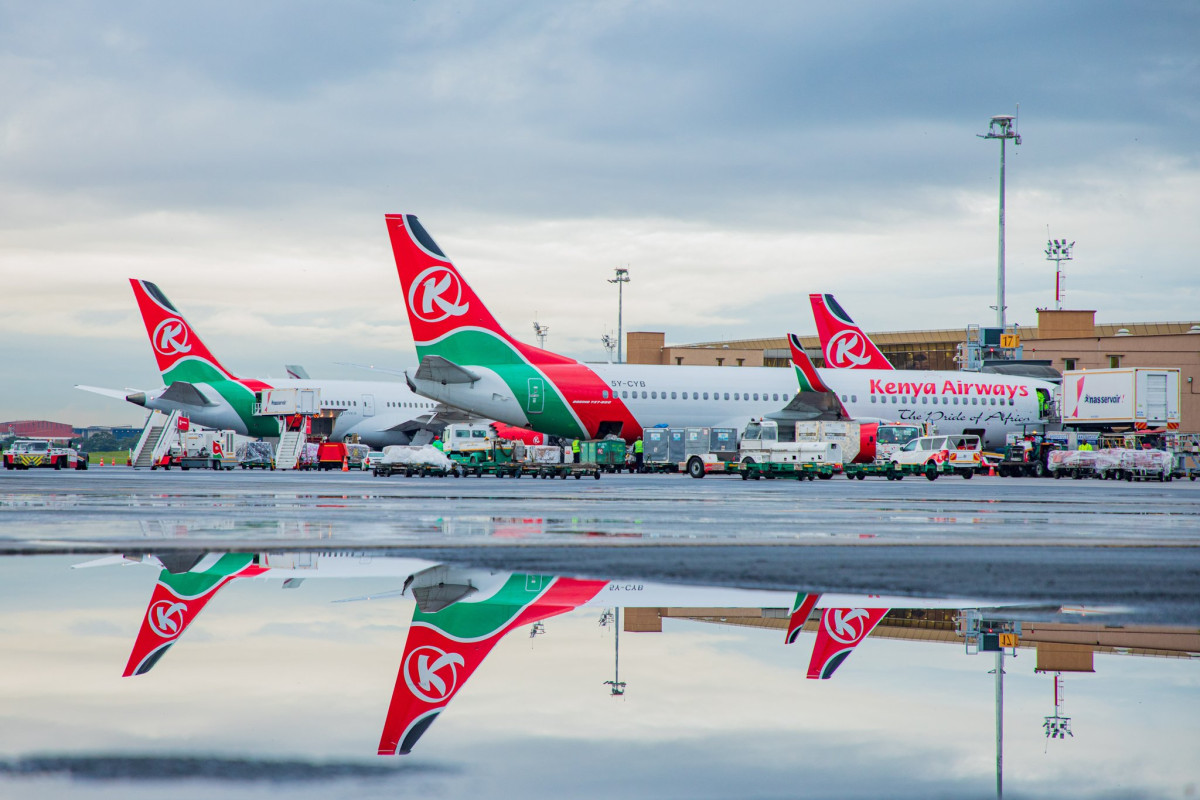
At its 50th AGM, Kenya Airways admitted that grounded aircraft are slashing seat capacity by up to 18%. The bigger question for shareholders: can the national carrier pull off its recovery — and will a strategic investor finally show up?
Kenya Airways (NSE: KQ) marked a milestone and a reckoning on the same day. As the airline held its 50th Annual General Meeting in Nairobi on Thursday, management used the platform to level with shareholders about the operational hole it is still climbing out of — even as it laid out an ambitious roadmap for the next decade.
The most pressing issue came straight from the top. Acting Group MD and CEO Captain George Kamal told shareholders that grounded aircraft are cutting the airline’s available seat capacity by 15 to 18 per cent.
The good news, he said, is that the worst may be passing. Kenya Airways returned three aircraft to service over December and January and recently brought a Boeing 787 Dreamliner back online. Once a key wide-body is fully reinstated, Kamal expects the capacity shortfall to narrow to 6 to 8 per cent, leaving just one aircraft on the ground.
It’s a familiar wound. The grounding of wide-body Dreamliners for maintenance was the single biggest driver behind Kenya Airways’ heavy 2025 loss.
The Numbers Behind Kenya Airways’ AGM
The AGM sits on an uncomfortable financial base. For FY2025, Kenya Airways swung to a net loss of KES 17.1 billion, reversing the KES 5.4 billion profit it posted in 2024, which had been its first full-year profit in over a decade.
Total income fell from KES 188.5 billion to KES 161.5 billion, dragged down by reduced cargo volumes and disrupted flight schedules, and the airline reported an operating loss of around KES 5.6 billion. Kenya Airways also remains in negative equity, with a shareholder deficit of roughly KES 132 billion, the long shadow of years of losses and debt.


The long-term ambition, however, stays intact: roughly 60 aircraft by 2030 and up to 100 by 2035, through a mix of owned and leased planes — anchoring Nairobi’s JKIA as a continental hub.
Kamal also flagged that fuel hedging has become riskier amid volatile oil prices, limiting how aggressively the airline can lock in costs. On routes, Kenya Airways is reviewing its network dynamically by season, demand, and fuel cost, with some destinations likely to be consolidated rather than scrapped outright.
New board, and the hunt for capital
The AGM follows a sweeping governance reset. Kiprono Kittony, who also chairs the Nairobi Securities Exchange, took over as board chairman in March, alongside new directors including economist Dr David Ndii, Chris Diaz, and Prof. Winnie Nyamute. Kamal himself stepped up to acting CEO after Allan Kilavuka’s exit in December 2025, and the board is still running a competitive search for a substantive chief executive.
The decisive variable, though, is capital. The government is preparing an expression of interest to bring in a strategic investor expected to inject up to KES 258 billion to recapitalise the carrier. For a balance sheet this stretched, that injection, not seat numbers, is what will ultimately determine whether KQ flies clear of its troubles.
Shareholders holding KQ on the NSE, the AGM offered a clear-eyed mix of pain and plan: a real operational recovery underway on the fleet side, but a balance sheet that still needs outside rescue. The turnaround story is credible, but it is not yet self-funding, and a lot rides on the strategic-investor process landing on terms that don’t heavily dilute or sideline existing holders.
The signal to watch over the coming quarters is simple: how fast the grounded jets return, and whether that KES 258 billion turns from a headline into a signed deal.


