


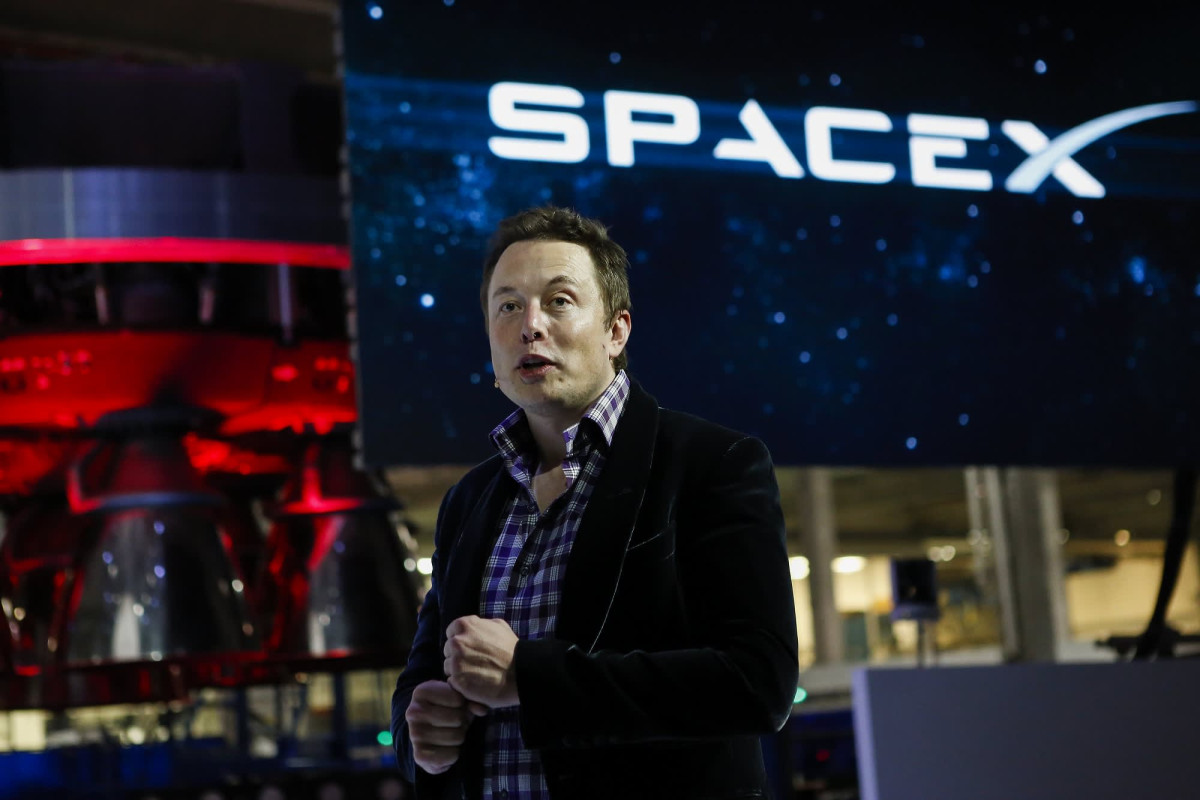
Elon Musk’s rocket company SpaceX, raised a record $75 billion and started trading on Nasdaq today. For Kenyans, the question is simple: can you get a piece, and should you?
SpaceX has officially gone public, completing the largest initial public offering the world has ever seen. The rocket and satellite maker priced its shares at $135 each (about KES 17,400) late Thursday, raising roughly $75 billion and beginning trade on the Nasdaq this Friday under the ticker SPCX.
The deal is historic in scale. It leapfrogs Saudi Aramco’s 2019 listing — which raised close to $26 billion, to become the biggest IPO on record. At its offer price, SpaceX is valued at about $1.77 trillion, making it the seventh most valuable company in the United States and pushing it ahead of Musk’s own electric-car maker, Tesla.
Follow today’s $SPCX events → https://t.co/xwwzZlEt1o
— SpaceX (@SpaceX) June 12, 2026
SpaceX Demand went through the roof
This was not a quiet listing. SpaceX took a “take-it-or-leave-it” approach, fixing the price at $135 rather than offering a range, and investors still piled in. The order book ran more than three times oversubscribed, with total demand reported above $200 billion and retail orders alone topping $100 billion.
Unusually, SpaceX set aside roughly 30% of the offering for ordinary investors — far above the 5–10% typical for a mega-IPO. In the US, brokers including Robinhood, Fidelity, Charles Schwab, SoFi and E*TRADE handled retail allocations, with some resorting to a random lottery to share out the scarce stock.
Pre-market signals suggest the shares could open well above $135. Synthetic contracts tracking SPCX on crypto platforms were changing hands around $177, a 30% premium, and prediction markets were betting heavily on an opening between $150 and $200. Oppenheimer initiated coverage with an “outperform” rating and a 12–18 month target of $190.
More than rockets
Buying SpaceX is no longer just a bet on Falcon 9 and Starship. The company now houses Starlink, its fast-growing satellite-internet arm, which already serves over nine million users and contributed the bulk of 2025 revenue, as well as xAI, Musk’s artificial-intelligence venture, following its merger with X (formerly Twitter).

The financials, however, come with a health warning. SpaceX posted 2025 revenue of about $18.7 billion but a net loss of nearly $4.9 billion, driven by heavy AI spending. First-quarter 2026 losses widened on costs tied to absorbing xAI. Investors are buying a growth story, not a profit machine, at least not yet.
The listing also cements Musk’s status as the world’s richest person, turning his roughly 42% stake into a paper trillionaire’s fortune. With 82.4% of the voting power, he keeps near-total control of the company’s direction.
So, can a Kenyan investor buy in?
Yes, but with two important caveats.
First, the IPO allocation itself was handled by US brokers, so Kenyans were not in line for shares at the $135 offer price. What you can do is buy SPCX on the open market once it is trading, like any other US-listed stock.
Several CMA-regulated platforms already let Kenyans access US shares directly from their phones using mobile money:
- Hisa App — offers fractional US stocks (from as little as a few dollars) in partnership with Faida Investment Bank, at a flat 1% fee per trade.
- Ndovu Wealth — CMA-licensed, routes orders to US markets via Interactive Brokers.
Fractional ownership matters here: at roughly KES 17,400 a full share, the ability to buy a slice via Hisa App means a Kenyan investor can take a position with modest capital.
Second, mind the risks. Buying on debut day means paying the market price, not the offer price, and if the stock opens near $177, you’re already entering at a steep premium to where institutions got in. First-day IPO volatility is real, you’ll carry currency risk between the shilling and the dollar, and the company is still loss-making. The frenzy around a famous name is exactly when discipline matters most.
For Kenyan investors, SpaceX is a reminder that global markets are now a tap away, but also that the hype around a household name is no substitute for doing the homework.
Also Read: Larry Ellison Tops Elon Musk in Billionaire Rankings After Earning $101 Billion


