


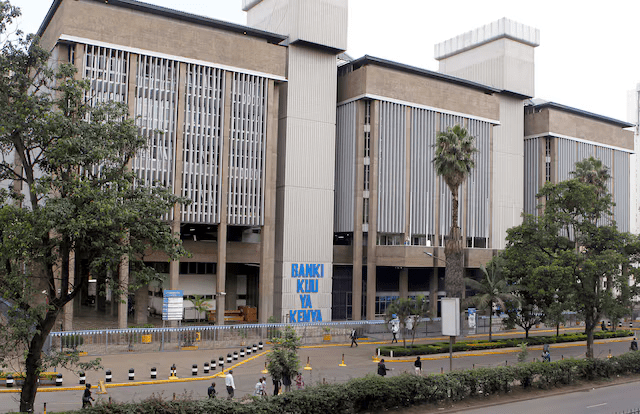
As of December 2025, Kenya’s total public debt reached KES 12.30 trillion, representing a marginal 0.13% decrease from November 2025. While we continue to manage significant external obligations, the composition of this debt remains heavily on the domestic market.
Domestic debt stood at KES 6.84 trillion at the close of 2025, accounting for approximately 55.6% of the total debt stock. This internal liability grew by 0.79% in the final month of the year, even as external debt dipped slightly to KES 5.46 trillion.
Kenya’s domestic debt is primarily comprised of Treasury bonds and Treasury bills, which serve as critical tools for the government to finance its fiscal deficit. In the first quarter of 2026 alone, the government raised KES 265.68 billion through the primary market via the reopening of six Treasury bonds and two switch bonds.
The cost of servicing this internal debt is a substantial burden on the exchequer. In the FY 2025/26 budget, the government allocated KES 851.4 billion for domestic interest payments. This figure far outweighs the KES 246.3 billion set aside for foreign interest payments, highlighting the high cost of borrowing from the local market.
In the primary market, the total amount of Treasury bonds accepted over the period from March 2025 to March 2026 reached approximately KESs. 1,215.79 billion. This includes amounts accepted through re-opened bonds, tap sales, and switch auctions.
The corporate bond market also saw notable activity. As of December 31, 2025, the total value of outstanding corporate bond issues stood at KESs. 96.4 billion, a 37% increase. Significant amounts were accepted for new issuances during the latter half of the year:
Secondary Market Turnover
The secondary market witnessed even higher activity. For the full year 2025, the Treasury bond turnover was KESs. 2,710.11 billion, while corporate bond turnover reached KESs. 0.84 billion. In Q1 2026, Treasury bond turnover in the secondary market had already surpassed the KESs. 1 trillion mark, settling at KESs. 1,080.12 billion.

Strategic Management: The 2025 MTDS
Under the 2025 Medium-Term Debt Management Strategy (MTDS), the National Treasury is actively working to restructure the internal debt profile to reduce refinancing risks. A central pillar of this strategy is lengthening the Average Time to Maturity (ATM) of the domestic portfolio by issuing medium-to-long-term instruments instead of short-term ones.
One practical execution of this strategy is the use of switch auctions. For example, in March 2026, the CBK conducted a voluntary switch to migrate KES 20 billion in liabilities from a bond with only 0.3 years to maturity (FXD1/2016/010) to a longer-term paper with 7.1 years remaining (FXD1/2018/015).
This move effectively defers immediate repayment obligations, providing the government with much-needed fiscal breathing room. Additionally, the government aims to reduce the proportion of Treasury bills in the portfolio from 5.1% to 3.7% to further mitigate short-term repayment pressure.
Kenya’s Shift to Investment-Led Growth
To curb the continued rise of public debt, the National Infrastructure Fund (NIF) and the Sovereign Wealth Fund have been established. These vehicles are designed to shift the country away from a debt-driven development model toward one led by strategic investment. This transition is essential for reaching the government’s goal of reducing the interest payment burden from its current levels to 4.6% of GDP by 2028.
Also read: 27 Lenders Defy CBK’s Directive on Uniform Loan Pricing


