


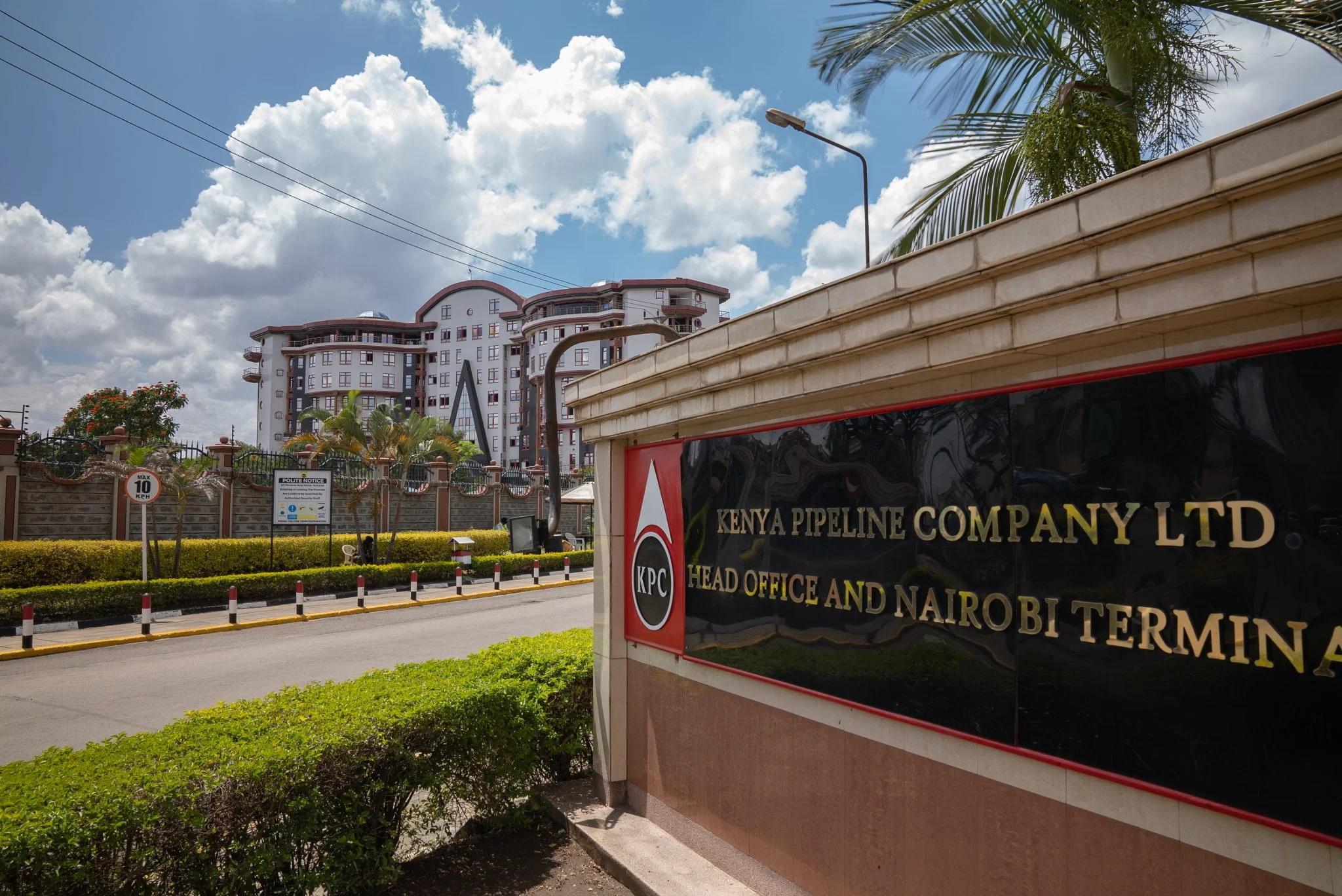
Months after Kenyans bought into Kenya Pipeline Company (KPC) in the country’s first IPO since 2015, Kenya Pipeline’s board has told them to tread carefully in its stock, as a decade-old contractor war flares up once more.
Kenya Pipeline Company PLC (KPC) has issued a cautionary announcement to the market, disclosing that Lebanese contractor Zakhem International Construction (ZIC) has filed a fresh suit against it at the High Court in Milimani (HCCOMM E346 of 2026). The claim is steep: USD 84.1 million — roughly KES 10.8 billion — and the timing could hardly be more awkward.
What Zakhem is claiming
The dispute stems from the contract for the procurement, construction, testing, and Commissioning of the Line 1 Replacement Project, the Mombasa–Nairobi artery that is the backbone of the country’s fuel supply. ZIC says KPC has failed to pay it on two counts: USD 19.04 million in extension-of-time claims and USD 65.08 million in interest on delayed payments, for a combined demand of USD 84,117,441.16.
KPC isn’t conceding. The board says that, on preliminary legal advice, it has credible legal and factual grounds to contest the claim, will defend the proceedings, and has instructed its advocates accordingly. It stresses that the matter does not affect the company’s strategic focus, operational stability, or financial position. The announcement, signed by Company Secretary Flora Okoth and issued with Capital Markets Authority approval, is explicitly not an admission of liability.
This is no bolt from the blue. It is the latest salvo in a decade-long war that traces back to 2014, when Zakhem won the roughly USD 484.5 million (KES 63 billion) contract to lay the new Mombasa–Nairobi line. The relationship has since curdled into a tangle of disputes — including the 2018 Ecobank suit that dragged KPC into a USD 52 million debt recovery action over a financing arrangement it never signed, and a KES 485 million garnishee order already secured by Zakhem over the related Line V works. Court records suggest KPC has already bled billions of shillings in interest as the cases grind through Kenya’s notoriously slow commercial courts. Regular readers will recall we flagged this as part of KPC’s “KES 63 billion crisis” earlier this year.
Why Investors Should Be Concerned About The KPC – Zakheem Lawsuit.
KPC is no longer a sleepy parastatal; it was listed on the NSE in early 2026 after the government sold a 65% stake in the country’s first IPO in a decade, putting the stock into the hands of thousands of ordinary Kenyans and institutions. Proceeds are earmarked to seed the new National Infrastructure Fund, now bankrolling key government projects like the JKIA upgrade.
So when KPC’s own board advises shareholders and investors to exercise caution when dealing in the company’s securities pending resolution, that warning lands directly on a freshly minted retail register. The legal exposure was always flagged in the privatisation paperwork. Parliament put KPC’s pending-lawsuit liabilities at around KES 5.75 billion before listing, but a live USD 84 million claim crystallises a risk that buyers were asked to price in only on paper.

The bottom line: KPC insists this changes nothing operationally, and a cautionary announcement is a disclosure, not a verdict. But for a newly public company still earning the market’s trust, a fresh ten-figure claim from an old adversary is exactly the kind of overhang that tests investor patience, and the share price, long before any judge rules.


