


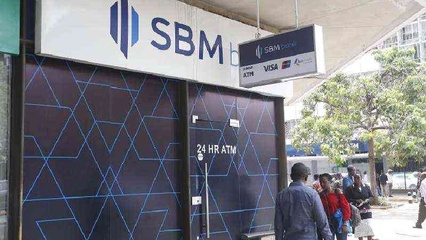
Mauritius-based SBM Holdings injected an additional KES 405 million into its Kenyan subsidiary, SBM Bank Kenya, during the financial year ended December 2025 as the lender intensified efforts to meet the Central Bank of Kenya’s revised minimum capital requirements. The latest capital injection reflects a broader trend among commercial banks seeking to strengthen their balance sheets ahead of the phased increase in core capital thresholds that will culminate in a KES 10 billion requirement by 2029.
The fresh funding came on top of earlier capital support amounting to KES 819 million in 2024 and KES 471 million in 2023, further reinforcing SBM Bank Kenya’s financial position. As a result, the bank’s core capital stood at KES 7.68 billion by the close of 2025 before rising further to KES 7.78 billion at the end of March 2026. Despite the improvement, the figure remained slightly below the KES 8.03 billion recorded in 2024.
According to SBM Holdings’ latest annual report, the bank recorded moderate growth in lending activities, with loans and advances increasing from MUR16.5 billion to MUR16.9 billion. Deposits, however, expanded at a stronger pace, rising from MUR25.2 billion to MUR29.7 billion, a development that significantly enhanced the bank’s liquidity and funding base. Total assets also grew from MUR37.2 billion to MUR38.1 billion, while shareholders’ equity increased from MUR3.3 billion to MUR3.7 billion, supported largely by the latest capital injection from the parent company.
The additional funding comes at a time when Kenyan banks are adjusting to stricter capital regulations introduced under the Kenya Business Laws (Amendment) Act of 2024. The law raised the minimum core capital requirement for banks from KES 1 billion to KES 10 billion over a five-year transition period running from 2025 to 2029. Under the phased implementation plan, lenders were expected to increase their minimum core capital to KES 3 billion by the end of December 2025, before progressively raising it to KES 5 billion in 2026, KES 6 billion in 2027, KES 8 billion in 2028, and ultimately KES 10 billion in 2029.
SBM Bank Kenya indicated that it continues to explore several recapitalisation strategies whenever additional capital needs arise. These options include the injection of share capital, raising tier capital, and optimising total risk-weighted assets in order to maintain compliance with regulatory standards while supporting future business growth.
The lender maintained strong prudential ratios during the review period. Its core capital to total risk-weighted assets ratio stood at 13.8 percent in 2025, comfortably above the Central Bank of Kenya’s minimum requirement of 10.5 percent. The bank’s liquidity ratio was also significantly higher at 47.6 percent compared to the regulatory minimum threshold of 20 percent, indicating sufficient financial headroom to support additional lending and operational expansion.
SBM Bank Earnings
Financially, SBM Bank Kenya returned to profitability in 2025, posting a net profit of KES 444.21 million compared to a net loss of KES 1.21 billion recorded in 2024. The turnaround was attributed to stronger interest and non-interest income streams, combined with prudent cost containment measures implemented during the year.

SBM Holdings first entered the Kenyan market in May 2017 through the acquisition of Fidelity Commercial Bank in a rescue transaction valued at a token consideration of one dollar, equivalent to approximately KES 128.17. The group subsequently injected USD 20 million, which is roughly KES 2.56 billion, into the institution and later rebranded it as SBM Bank Kenya. In August 2018, the Mauritian lender further expanded its presence by acquiring selected assets and liabilities of Chase Bank Kenya, which had been placed under receivership.
The group has since committed substantial financial support to its Kenyan subsidiary, including a broader pledge to inject USD 60 million, equivalent to about KES 7.69 billion. By 2025, SBM Bank Kenya operated a network of 33 branches across the country, while customer deposits increased by 20 percent from KES 69 billion in 2024 to KES 82 billion in 2025, underscoring growing customer confidence and an expanding market presence.


