


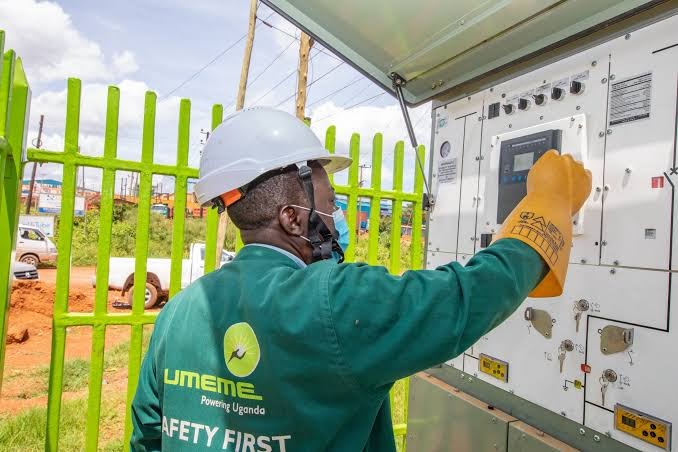
Umeme Limited has published its audited financial statements for the year ended 31 December 2025 — the final chapter of its two-decade electricity distribution concession in Uganda. The numbers tell the story of a business in structured wind-down: three months of active operations, a loss after tax of Ushs 223.6bn, and a balance sheet now technically insolvent, with total equity collapsing to (Ushs 353.9bn).
The concession formally ended on 31 March 2025, when Umeme handed operational control of the electricity distribution network back to the Government of Uganda (GoU), transferring assets to the newly established Uganda Electricity Distribution Company Limited (UEDCL). That transition means the FY2025 P&L captures only one quarter of trading revenue — a structural distortion that makes direct year-on-year comparisons largely academic, but which also exposes the sheer weight of non-cash charges and legacy obligations dragging on results.
Gross margin held at roughly 18.8% for the period — broadly respectable given the operational wind-down context. The real story is below the gross profit line. Administration costs of Ushs 107bn against three months of revenue signal the structural overhead that couldn’t be stripped down fast enough, and the Ushs 136bn in amortisation, impairment and write-offs of intangible assets is the concession infrastructure being derecognised from the books. The company carried Ushs 145bn in intangible assets at the end of 2024; they’ve been fully written off by year-end 2025.

The finance cost line actually worsened for Umeme — rising to Ushs 42.8bn from Ushs 29.2bn — a counterintuitive result given the winding-down profile. This likely reflects costs tied to the arbitration process and settlement mechanics. Finance income remains negligible at Ushs 6.3bn.
The financial statements are, in many ways, a sideshow to the central drama: Umeme has commenced arbitration proceedings against the Government of Uganda at the London Court of International Arbitration (LCIA). The company received US$ 126.8 million (Ushs 457.3bn) as partial payment of the Buy-Out Amount — the contractually agreed compensation for handing back the distribution network — but maintains that the full amount remains unpaid.
The Privatisation Agreements, which underpin the original concession structure, explicitly provide that the Retransfer Transition Period ends only upon full payment of the Buy-Out Amount. Umeme is therefore arguing that it retains specific legal rights until that obligation is discharged. The cash flow statement confirms the Ushs 457.3bn inflow from the buy-out proceeds, which was the primary driver of a sharp swing to positive net cash from investing activities of Ushs 427.6bn — against net cash outflows of Ushs 106.9bn in FY2024.

Complicating matters further, Uganda Electricity Transmission Company Limited (UETCL) has filed a counter-claim for non-payment against Umeme. The company disputes this, asserting the UETCL claim is intrinsically linked to the Buy-Out Amount claim and is therefore being handled within the same arbitration proceedings.
The board has indicated that confidentiality rules of the arbitration process limit what can be publicly disclosed. Shareholders are promised updates on material events subject to Arbitral Tribunal approval.
Following receipt of the partial Buy-Out settlement, Umeme’s Board declared an interim dividend of Ushs 222 per ordinary share (withholding tax applicable), which was paid to shareholders by 31 July 2025. The dividend is reflected in the Ushs 360.5bn financing outflow on the cash flow statement — significantly higher than the Ushs 169.2bn in the prior year, which itself covered interim and final dividends for 2023 and an interim for 2024.
The board has declined to recommend a final dividend for FY2025. Given the negative equity position and the ongoing arbitration, this was the only responsible course of action. Future dividend decisions will hinge almost entirely on the arbitration outcome.


