


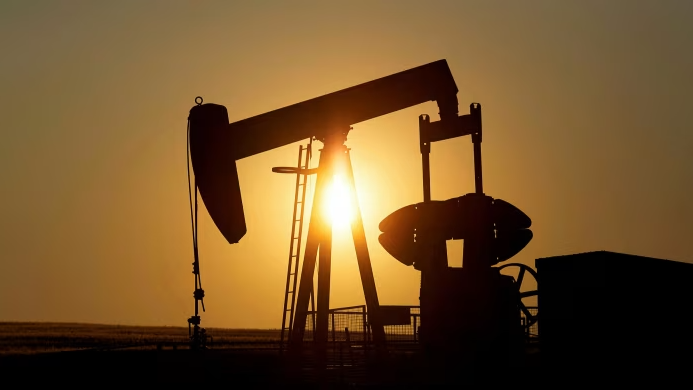
Crude oil prices experienced a significant increase on Sunday, driven by heightened tensions between the United States and Iran, as both nations appeared to edge closer to renewed military conflict following a series of attacks on commercial vessels in the Strait of Hormuz. In turn, West Texas Intermediate (WTI) futures for May delivery had risen approximately 7 percent, reaching USD 89.74 per barrel. Meanwhile, the international benchmark, Brent crude oil for June delivery, advanced nearly 5.8 percent to USD 95.59 per barrel.

Oil Market Volatility Rises
The escalation in the oil market follows a series of confrontations at sea. On Sunday, the U.S. Navy fired upon an Iranian container ship in the Gulf of Oman, after which U.S. Marines took custody of the vessel, according to President Donald Trump. In a post on Truth Social, Trump asserted that the Iranian ship had attempted to breach the U.S. naval blockade of Iranian ports. This seizure occurred one day after Iran attacked a tanker in the Strait of Hormuz. The United Kingdom Maritime Operations Centre reported that Iranian Revolutionary Guard gunboats fired on the tanker, and a separate container ship was struck by an unidentified projectile.
In a related development, former President Trump reiterated a threat on Sunday to destroy all power plants and bridges in Iran unless its leadership agrees to a deal with the United States. He described Iran’s weekend attacks on ships as a “total violation” of the existing ceasefire, which is scheduled to expire this week. It remains uncertain whether both nations will participate in a second round of peace negotiations in Pakistan. While Trump claimed that talks would take place in Islamabad on Monday, Iran’s state news agency IRNA reported that the country would not attend, citing the ongoing U.S. naval blockade and other grievances.
The sudden deterioration in relations over the weekend followed a period during which the two countries appeared close to reaching an agreement. Oil prices had fallen sharply on Friday after Iran unexpectedly declared the Strait of Hormuz fully open to commercial traffic, a move presented as a response to a U.S.-brokered ceasefire agreement in Lebanon. However, it soon became evident that Tehran was reimposing the same conditions for transit through the strait. Simultaneously, President Trump refused to lift the U.S. naval blockade, prompting Iran to reverse its position and declare that the strait would remain closed until the blockade is removed.
Also Read: NSE Gains 0.5% in Week 16 as Market Shows Strong Bullish Momentum


