


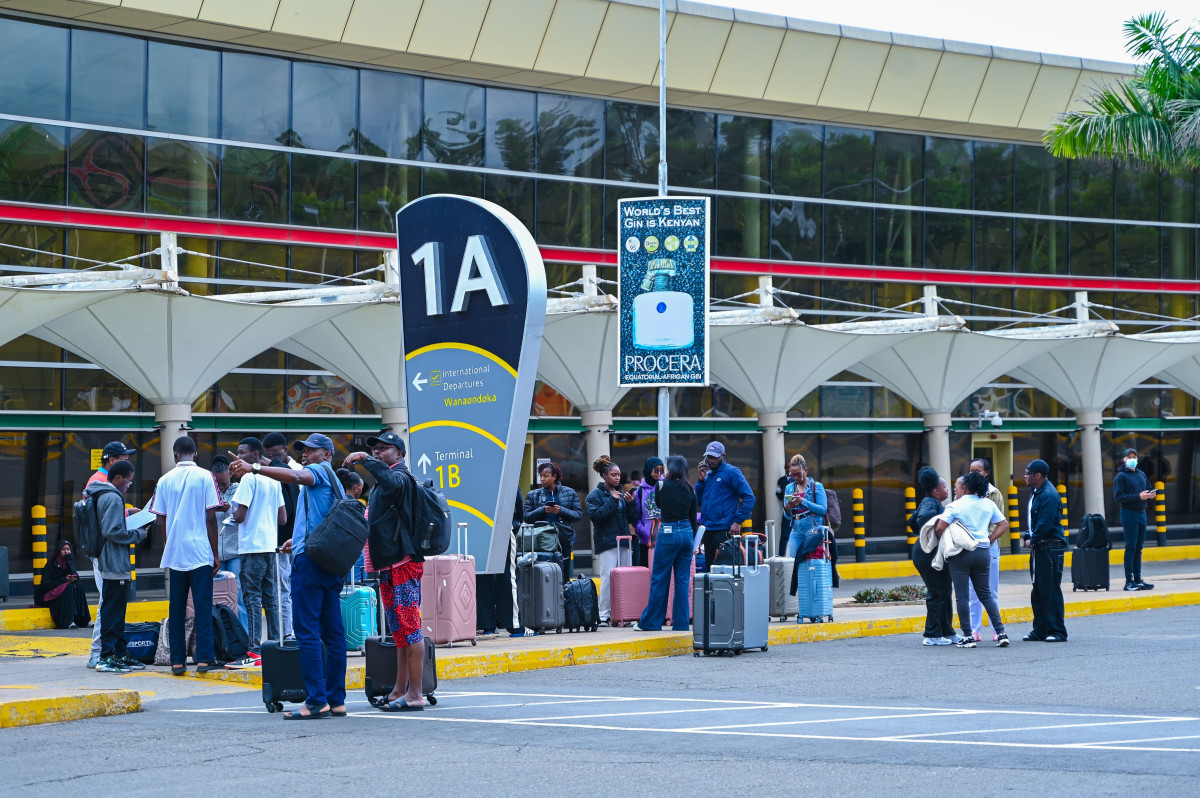
Two years after the JKIA – Adani deal collapsed, Kenya’s busiest airport finally has a builder, China Communications Construction Company (CCCC), one of the world’s largest infrastructure groups, which has reportedly been awarded the KES 375.4 billion ($2.9 billion) contract to expand Jomo Kenyatta International Airport, according to a Bloomberg report. The government has not yet made a formal announcement, so treat the name as firm-but-unconfirmed for now.
The headline is the return of Chinese contractors to a marquee Kenyan project. The story underneath is how the money is being raised, and that is the part with the longest tail.
A New Financing Engine, First Test
JKIA is the maiden project under the National Infrastructure Fund (NIF), signed into law in March 2026. The fund is seeded with roughly KES 106 billion from the privatisation of Kenya Pipeline Company, which the government intends to leverage up to twelvefold, potentially mobilising KES 1.2 trillion, and as much as KES 5 trillion over the decade.
The JKIA bill itself is to be met through NIF proceeds plus commercial loans backed by securitised air-passenger service charges; the levy of KES 6,450 on every international ticket and KES 600 on domestic ones. In plain terms: future passenger fees are packaged into a security and sold to investors today, ring-fenced to repay the build. The pitch is seductive, infrastructure without piling onto the sovereign loan book.
What it means for Kenya
The scale is real. JKIA handled about 8.93 million passengers in 2025 against a design capacity of 7.5 million, with years of operating beyond its limits on a single runway. The plan adds a terminal for 10 million more passengers, a second runway of five kilometres, modernised passenger processing, and an Airport City and Special Economic Zone. With Ethiopia building a 100-million-passenger mega-hub and Rwanda’s Bugesera coming online, this is Kenya defending its status as the region’s aviation gateway.
But the financing carries a quiet catch. The IMF has already warned Kenya to treat securitised cash as debt, and the government has now leaned on future tax and levy flows to raise well over KES 335 billion across stadiums, roads, rail, and this airport. Call it off-balance-sheet if you like; the obligation to repay does not vanish, and for a country the Fund rates at high risk of debt distress, the distinction matters to every investor pricing Kenyan paper.
And the China question returns. The choice of CCCC for the JKIA tender revives a familiar dynamic: Chinese contractor, Chinese co-financing, barely a few years after the SGR’s currency-mismatched loans became the cautionary tale Ruto himself now cites. The NIF model is meant to fix exactly that flaw by raising and repaying in shillings. Whether it does, on a project this size, is the test the whole strategy now rides on.


