


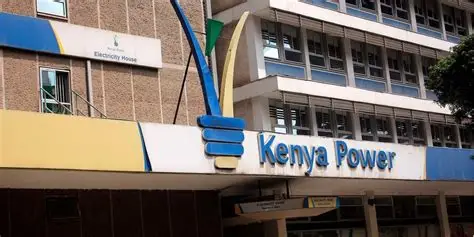
Kenya has officially cleared the path for electricity producers to sell power directly to large consumers, defying a warning from the World Bank against ending the monopoly long held by Kenya Power. The government published the Energy (Electricity Market, Bulk Supply and Open Access) Regulations of 2026, which allow power producers to rival the state-controlled distributor. Under the new rules, producers without existing power purchase agreements with Kenya Power may sell electricity directly to major consumers, including small commercial enterprises, industries, and factories. To reach these customers, producers will apply to use the transmission and distribution networks of Kenya Power and the Kenya Electricity Transmission Company (Ketraco), paying both firms an access fee known as wheeling charges.
World Bank Warns Kenya of Higher Domestic Tariffs
The World Bank had cautioned that introducing competition to the sole distributor would likely trigger a surge in electricity prices, which have already risen more than any other basic item over the past five years. Currently, larger, wealthier customers pay a higher unit rate for electricity, allowing Kenya Power to subsidize domestic consumers. The Bank warned that if these large consumers migrate to new entrants, domestic users could be forced to bear higher costs. Kenya Power now serves approximately 70 percent of its customer base through big consumers.
The new regulations mandate that a network service provider must grant non‑discriminatory open access to its transmission or distribution system to any licensee or eligible consumer, provided the load sharing mechanism is fair and equitable. Specifically, access is granted if the load is no less than one megavolt‑ampere (1 MVA) in the distribution system or ten megavolt‑amperes (10 MVA) in the transmission system, a threshold that includes factories or large residential‑commercial communities with high daily power usage.
The World Bank further warns that exposing Kenya Power to competition could cripple the Nairobi‑listed utility, given its long‑term wholesale electricity agreements with generators such as KenGen, Lake Turkana Wind, and OrPower4. Under the new framework, direct sale agreements between producers and consumers will last between one and ten years, with prices subject to approval by the Energy and Petroleum Regulatory Authority (Epra). Data from the year ending June 2025 shows that industries, factories, and businesses purchased 7,313 gigawatt‑hours (GWh) of power, or 70 percent of the 10,570 GWh sold by Kenya Power. The utility’s overall electricity sales have steadily grown, reaching 11,330.84 GWh in the year to June 2025, up from 10,473 GWh the previous year.
Opening the electricity retail space allows large consumers to secure an alternative power supply outside Kenya Power and grants generation investors a larger market. KenGen, the single largest supplier to Kenya Power, accounting for 59 percent (8,482 GWh) of the 14,472 GWh purchased by Kenya Power from producers in the year ending June 2025, has long sought to sell directly to consumers. In a February investor note, KenGen reiterated its intent to do so as a means of reducing business risk from relying on a single off‑taker, stating that only pending regulations on wheeling charges for transmission lines were needed.
The company, like other contracted producers, has also endured delays in receiving payments from Kenya Power. The regulations, gazetted on May 8, effectively end years of monopoly amid persistent consumer complaints over blackouts, unstable supply, and high costs. Many large consumers have already turned to backup options such as solar and biomass plants. Notably, industrial and commercial customers pay a demand charge, covering the cost of reserving high‑capacity infrastructure, which makes their unit price of electricity higher than that of domestic users. Kenya Power and Ketraco are now required to open their networks to licensed producers, who will pay wheeling charges for using the lines.


