


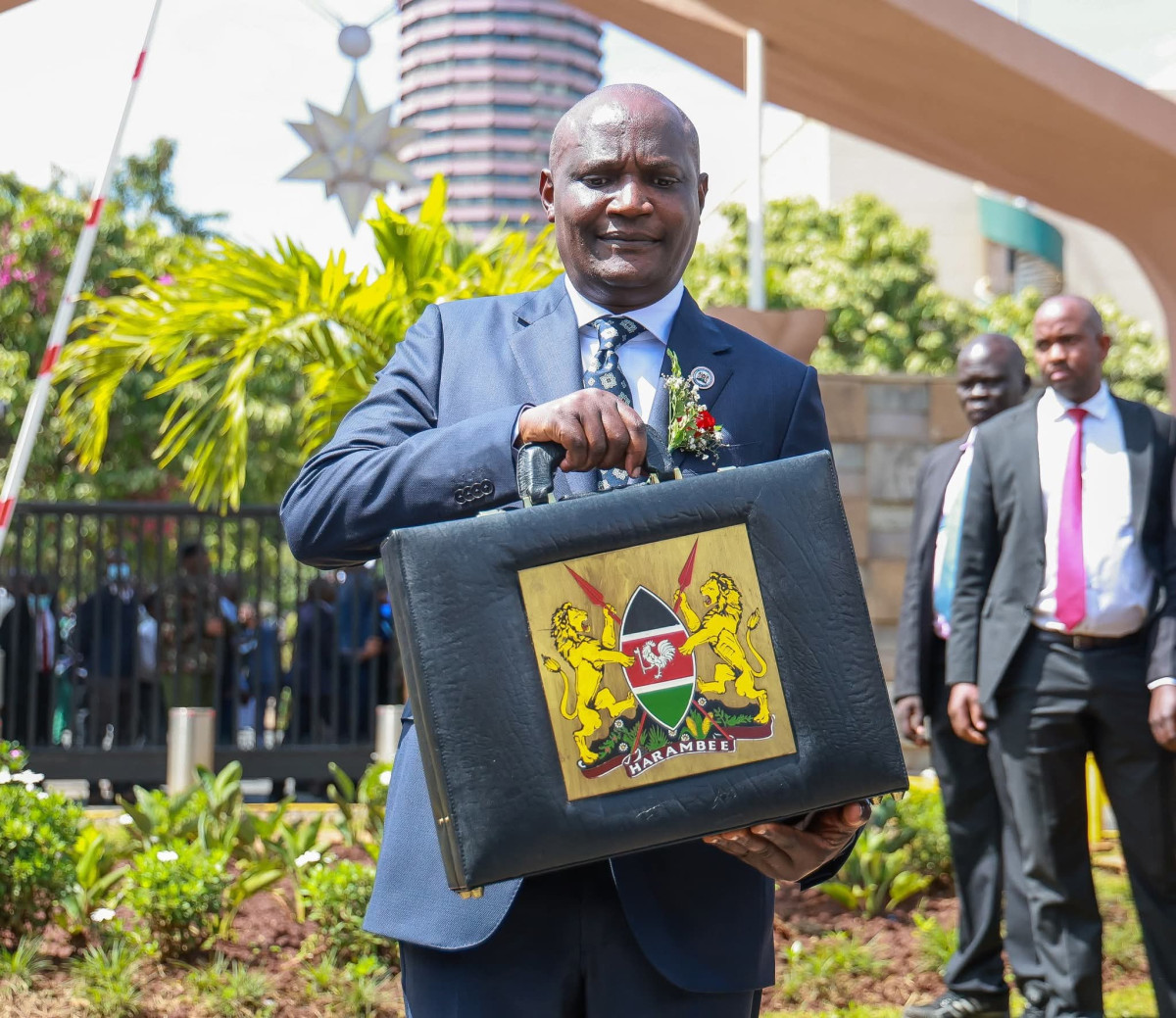
Treasury CS John Mbadi tables the FY2026/27 Budget Statement this afternoon — on paper, Kenya’s largest ever at KES 4.82 trillion. The official word is “fiscal consolidation.” The numbers say: still borrowing hard to plug the gap.
What Numbers are we Watching on the Budget?
The number that matters: KES 995.7bn. Of the roughly KES 1.1 trillion deficit, almost all — a record KES 995.7 billion — comes from the domestic market, against just KES 116.2 billion externally. That’s the crowding-out signal. Heavy government appetite keeps yields high: good for bank investment books, bad for the private-sector credit recovery that has only just clawed back to about eight percent.
Debt is the elephant. Public debt hit KES 12.82 trillion by March, past Parliament’s 55% of GDP anchor by some 15 points, with debt servicing eating roughly 42% of receipts. So listen for the deficit-to-GDP path, not the spend — that’s what rating agencies and the IMF read off.
Also Read: Kenya Secures $1.5 Billion in Oversubscribed Eurobond Issuance
Budget 2026 is Quiet on Tax
Tax is quieter this year. The Finance Bill 2026 leans on enforcement over new rates, targeting ~KES 120 billion. It runs on a separate track and is already tabled, so don’t expect bombshells today. The measures to watch: 16% VAT on digital payment and merchant fees (a hit to M-Pesa, fintechs, and bank transaction revenue); standard-rating of housing and tourism VAT plus a coal excise (pressure on cement and manufacturers); and REIT incentives (a small tailwind for listed property).
The Trading Room watch-list for 3 pm: the growth projection (Treasury pencilled 5.0–5.3%), the deficit figure, any departure from the tabled Finance Bill, and — once Mbadi sits down — the bond auction’s verdict and any move on the shilling.
Net read: no fireworks on rates. The story is debt, domestic borrowing, and whether “consolidation” is policy or just a word in the speech.

Full Trading Room reaction and analysis to follow once CS Mbadi delivers the Budget Statement.


