


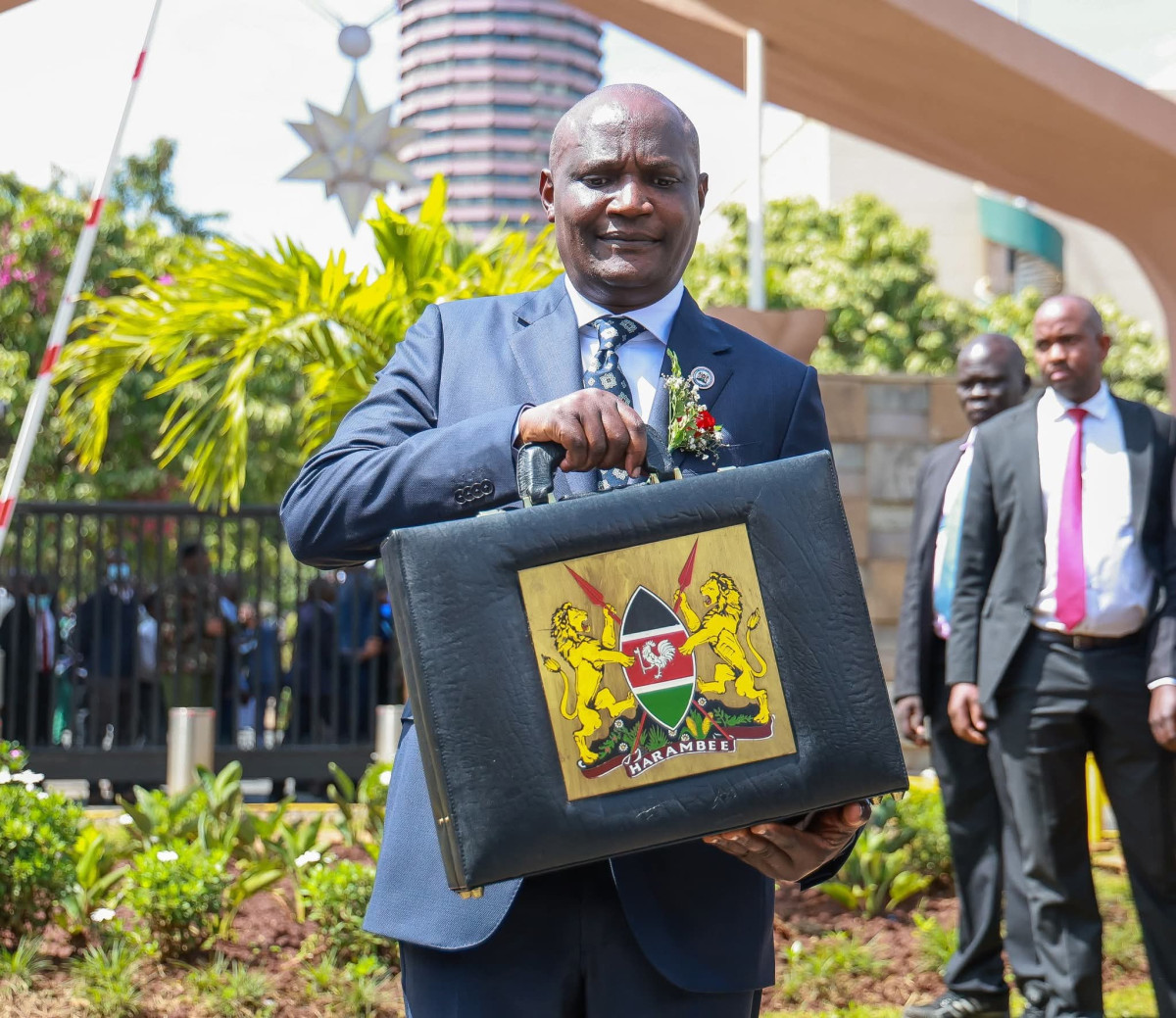
Kenya’s largest-ever budget, roughly KES 4.8 trillion for the 2026/27 financial year, was tabled in parliament today by Treasury Cabinet Secretary John Mbadi, wrapping it in the language of national transformation and a “path to Canaan through Singapore.” Strip away the rhetoric, and the fiscal arithmetic is what matters to markets, and it confirmed the preview: this is a spending plan that leans hard on debt.
The Budget numbers that move markets
The headline framework, as delivered:
- Total expenditure: ~KES 4.8 trillion
- Recurrent spending: KES 3.5 trillion — a dominant 17.1% of GDP
- Development spending: KES 749 billion
- Counties: KES 428 billion
- Revenue and grants: KES 3.64 trillion (ordinary revenue KES 2.95 trillion, just 14.9% of GDP)
- Fiscal deficit: KES 1.146 trillion — about 5.5% of GDP
That budget deficit is the whole ballgame. It will be financed largely through the domestic market, confirming the record local borrowing that crowds out private-sector credit and keeps yields elevated. For the listed banks, that’s a double-edged sword: fat returns on the government paper stuffing their books, but a stubborn ceiling on the lending recovery that’s only just clawed back to positive territory.
Read: Budget Day 2026: Forget the headline KES 4.82trn; watch the borrowing
The one structural promise worth holding Treasury to: recurrent spending is pencilled to fall from 17.1% of GDP now to 15.4% next year and 14.5% by 2028/29. If that glidepath holds, it’s the real consolidation story. If it slips, as it has before,”consolidation” stays a word in the speech.
Where The Money Goes
Education is the runaway winner at KES 784.5 billion, 26.4% of the entire budget, with Mbadi pushing back hard on “defunding” claims. Inside that: KES 56.3 billion for HELB, KES 30.9 billion for university scholarships, and KES 4.9 billion to convert 20,000 intern teachers to permanent terms from January 2027.
Agriculture drew KES 64 billion in the budget, including KES 18 billion for the fertiliser subsidy, a BETA cornerstone. Security held firm in a pre-election year, with the NIS alone keeping KES 58.6 billion. Notably, State House spending was trimmed to KES 12.6 billion from KES 16.3 billion, and Energy’s allocation was cut to KES 35 billion on the logic that commercially viable projects can be financed off-budget, a quiet nod to the same securitisation-and-PPP model now bankrolling the JKIA expansion.

Tax: The Heavy Lifting in the Finance Bill 2026.
The Budget Statement itself sprang a few tax surprises, because the revenue measures live in the Finance Bill 2026, already tabled and through public participation. Mbadi spent his defence on the contentious bits, gambling taxes, health exemptions and second-hand clothes (mitumba) relief, rather than unveiling new ones. For investors, the watch items remain those flagged in the preview: the proposed 16% VAT on digital payment and merchant fees (a direct hit to M-Pesa economics, fintechs and bank transaction revenue), and the standard-rating of housing and tourism VAT.
As a summary, the spending is record, the deficit is narrower than last year as a share of GDP but still heavy in shillings, and the entire credibility of “consolidation” now rests on a recurrent-spending diet the government has promised, and missed before.


