


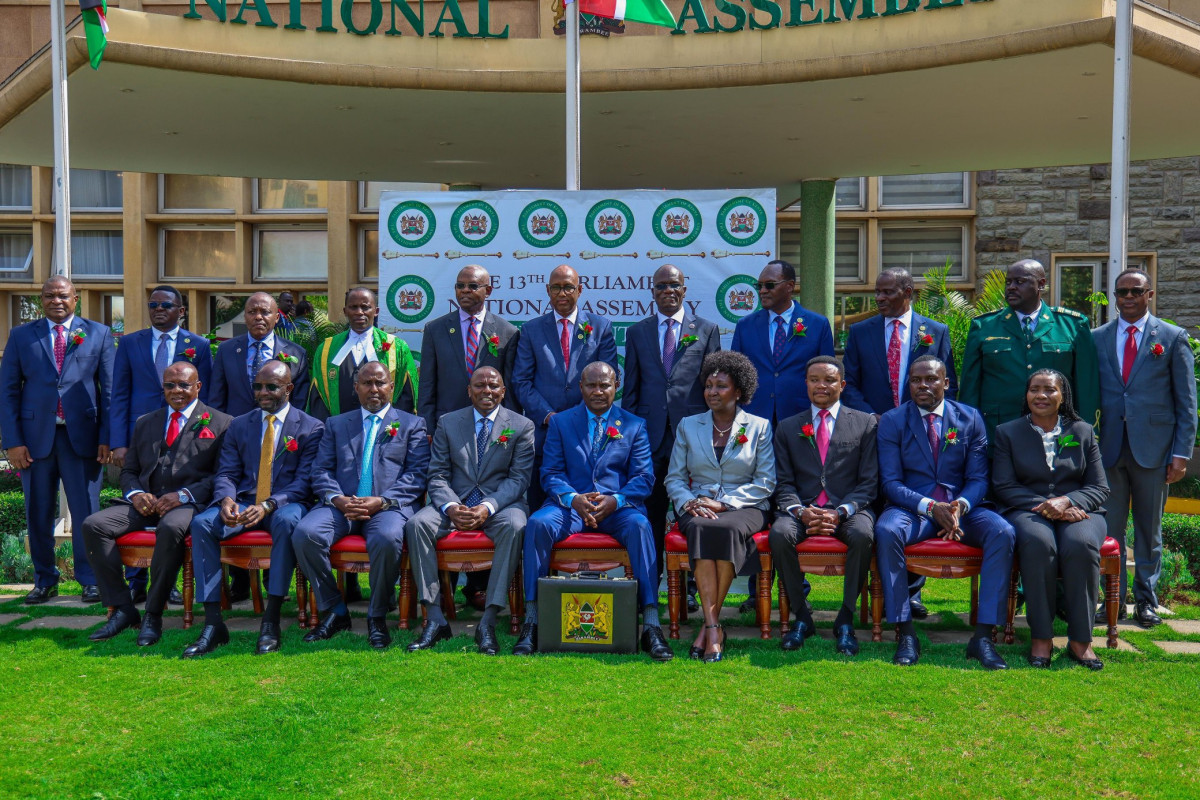
Treasury Cabinet Secretary FCPA John Mbadi yesterday told the National Assembly that the government will settle approximately KES 155.3 billion in verified pending bills over the next two fiscal years, offering relief to thousands of contractors and suppliers long owed money by the State.
Presenting the Budget Statement for the 2026/2027 financial year to Parliament in the afternoon, CS Mbadi highlighted the findings of the Pending Bills Verification Committee, which was set up in November 2023 to evaluate the state of national government pending bills accumulated in the country between June 1, 2005, and June 30, 2022.
The Committee reviewed a whopping 91,911 pending bills claims totaling about KES 637.6 billion, equivalent to about 3% of GDP. The verification exercise resulted in the earmarking of 29,885 claims for settlement with a gross monetary value of KES 235.6 billion. Of the verified KES 235.6 billion, KES 80.3 billion (34.1%) has already been paid out through securitization in the roads sector, resulting in an outstanding balance of KES 155.3 billion across other sectors.
Two-Year Plan to Settle Pending Bills
CS Mbadi put across a strategy bringing together allocations directly from the budget and securitization to offset the remaining KES 155.3 billion, starting in the next financial year 2026/27 where the National Treasury has proposed a KES 68.0 billion budget for clearing the bills. The allocation has been structured to prioritize suppliers owed up to KES 100 million, while also offsetting those with larger claims than this amount, with the CS emphasizing that no contractor would be left out of the process.
The KES 68.0 billion allocation is expected to settle 99% of outstanding pending bills by number and 63% of the bills by value. The pending bills of KES 88.0 billion will be addressed through other instruments available at the government’s disposal. The announcement comes as a relief to MSMEs that have waited for years for payment after undertaking government contracts. Many of these businesses have reported strains in their cash flow, with some forced to cut down staff or temporarily close operations.
Also Read: Budget 2026/27: A record KES 4.8trn, KES 1.15Trn Hole, and The Borrowing Bill Comes Due


