


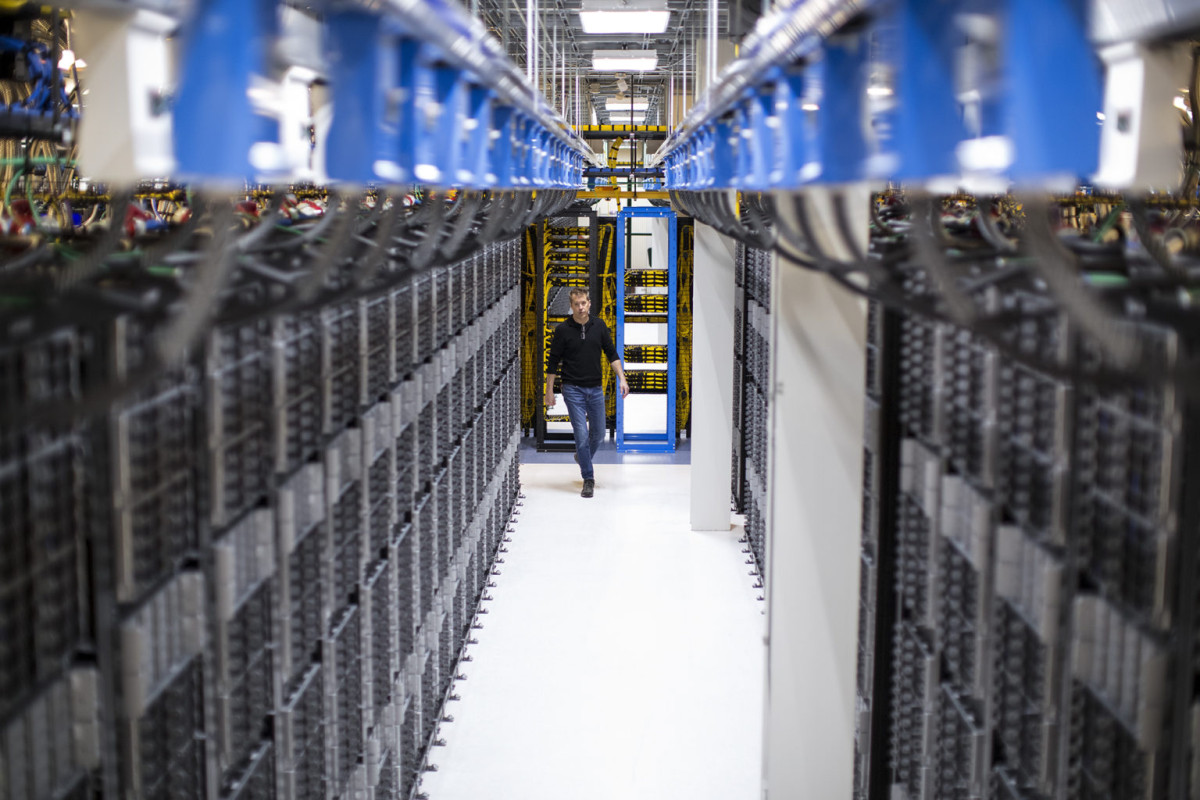
Kenya’s ambition to position itself as Africa’s leading technology hub has encountered a significant setback after plans for a proposed $1 billion hyperscale data center backed by Microsoft and UAE-based artificial intelligence firm G42 stalled amid concerns over energy capacity and financing constraints.
The project was unveiled during President William Ruto’s state visit to Washington, D.C. in May 2024 and it was designed to establish a hyperscale data center in Olkaria powered entirely by geothermal energy. The facility was to anchor an East Africa Cloud Region, providing businesses and governments with access to advanced Azure cloud services and artificial intelligence infrastructure while strengthening Kenya’s reputation as the Silicon Savannah.
G42 had begun efforts to develop an open-source AI model in both Swahili and English, a move aimed at increasing regional relevance and expanding access to AI-driven technologies across East Africa. At the time of its announcement, the project was viewed as a transformational investment capable of accelerating Kenya’s digital economy and attracting further global technology partnerships.
Kenya’s Datacenter ambition hits the wall
However, despite the project’s strategic significance, implementation challenges quickly emerged. Kenya’s current installed electricity generation capacity stands at approximately 3,000 megawatts (MW), while the proposed data center alone was projected to require nearly 1,000 MW to operate at full scale. The scale of the energy demand raised concerns over the country’s ability to support the facility without placing additional pressure on the national grid.
President Ruto later acknowledged the magnitude of the challenge, noting that powering the facility at the proposed scale would require substantial expansion of the country’s energy infrastructure.
President Ruto candidly explained the predicament, stating, “To switch on that one data center, we would need to shut off power for half the country”.
Although Kenya remains one of Africa’s leading producers of renewable energy, particularly geothermal power, the transmission and generation capacity required to support hyperscale digital infrastructure is still under development.
In addition to power constraints, the project also faced administrative and financing hurdles. Reports indicate that a concept proposal submitted through the technology ministry did not secure approval from the National Treasury, complicating efforts to advance the initiative within the anticipated timeline. By August 2025, officials had reportedly concluded that the project would miss its original May 2026 completion target.

The suspension of the project represents a significant missed opportunity for Kenya’s digital economy. Beyond the loss of an estimated $1 billion in foreign direct investment, the development had the potential to create substantial employment opportunities within engineering, data infrastructure, and digital services. The project was also expected to strengthen Kenya’s competitive position as a regional technology and cloud-computing hub at a time when other African markets, particularly South Africa, continue to attract major global technology investments.
The setback further highlights the growing challenge many emerging economies face in balancing ambitious digital transformation goals with the infrastructure demands required to sustain them. While Kenya possesses significant untapped geothermal potential the investments needed to fully harness and distribute that energy remain substantial.
Even so, the government continues to signal long-term commitment to expanding the country’s energy and digital infrastructure. President Ruto has outlined plans to increase Kenya’s electricity generation capacity to 10,000 MW by 2030 through a broader multi-billion-dollar energy investment strategy aimed at supporting industrialization, digital innovation, and future large-scale technology projects.
For now, the stalled Microsoft-G42 initiative serves as a reminder that Africa’s digital ambitions will depend not only on attracting global technology partners, but also on building the foundational infrastructure necessary to sustain next-generation investments.
Also read: Stanbic Bank Kenya Q1 2026 Results: Earnings Rise Amid Massive Balance Sheet Growth
DTB’s Group Exit From Burundi Yields Gains of KES 592Mn After Selling 84% of its Stake


