• Home
  • Business News
  • Weekly Reviews
  • Market Reports
Thursday, May 14, 2026
  • Login
  • Home
  • Business News
  • Weekly Reviews
  • Market Reports
  • Global Markets
  • Commodities
  • Corporate News
No Result
View All Result
The Trading Room
  • Home
  • Business News
  • Weekly Reviews
  • Market Reports
  • Global Markets
  • Commodities
  • Corporate News
No Result
View All Result
The Trading Room
No Result
View All Result
Home Business News

Kenya’s 16% VAT Plan on Digital Payment Platforms Could Hit Millions

Faith Kemboi by Faith Kemboi
in Business News
Reading Time: 2 mins read
A A
0
Kenya
Share on FacebookShare on Twitter

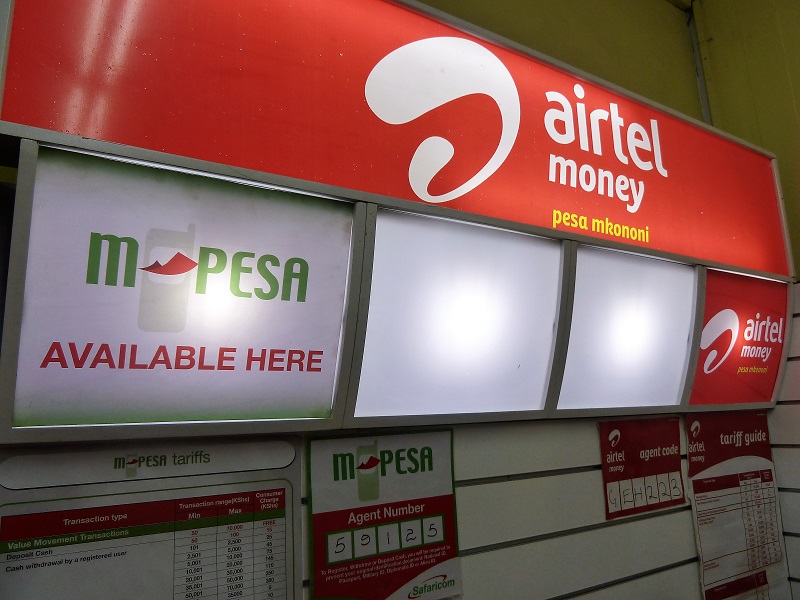
Kenya’s push to expand its tax base has opened a new debate over the future of digital finance, following the government’s proposal to introduce a 16% Value Added Tax (VAT) on payment service providers under the Finance Bill 2026. The proposal targets the country’s 42 licensed payment service providers, including major platforms such as Safaricom PLC’s M-Pesa, Airtel Kenya’s Airtel Money, and Pesapal, all of which have become central to Kenya’s rapidly expanding digital economy.

RELATED POSTS

Airtel Challenges Rivals With Sh5.6 Billion Tatu City Data Center Project

WPP Scangroup’s Ksh 3.1 Billion Losses Spark Revolt Against Directors

Kenya’s $1 Billion Microsoft Data Center Gone Dark

The proposal has reignited a longstanding debate surrounding how Kenya classifies mobile money and digital payment platforms around tax. Traditional banking services in Kenya are largely exempt from VAT under financial services provisions. Mobile money operators, on the other hand, are regulated as payment service providers rather than banks, placing them in a different legal and tax category. That distinction has previously triggered legal disputes and continues to fuel concerns over unequal treatment between banks and fintech platforms.

While the government maintains that the tax would primarily affect service providers, industry stakeholders and economists argue that the economic burden is unlikely to remain with the companies alone. In practice, VAT functions as a consumption tax, meaning service providers could ultimately pass higher operating costs to users through increased transaction charges. For millions of Kenyans who rely on mobile money daily, even marginal increases in fees could significantly affect household spending patterns.

Socio-Economic Effects for Kenyans

The debate carries substantial social and economic implications because mobile money has become essential public infrastructure. Today’s economic ecosystem is being driven by frequent low-value transactions used by ordinary households and small businesses.

Increasing the cost of digital payments could affect lower-income groups, many of whom remain outside the formal banking sector. Research examining taxation in lower-middle-income economies has also suggested a relationship between higher taxes on goods and services and increased poverty levels. Such findings have intensified concerns that additional levies on essential digital financial services could undermine years of progress in financial inclusion, an area where Kenya has long been viewed as a global leader.

The country’s digital payments have grown rapidly partly because of affordability, accessibility, and widespread adoption. Higher transaction costs may discourage usage volumes, particularly among customers conducting smaller and more frequent transfers that form the backbone of mobile money activity. This could slow innovation, reduce investment appetite in the sector, and challenge the growth momentum that has helped position Kenya as Africa’s leading fintech hub.

At the same time, some financial products linked to commercial banking partnerships may remain outside the scope of the proposed VAT. Services such as M-Shwari and Fuliza, which are structured as financial products in collaboration with regulated banks, would likely continue benefiting from existing VAT exemptions applied to financial services.

Buy JNews
ADVERTISEMENT

The Finance Bill 2026 is still undergoing parliamentary review, and the proposal is expected to face significant scrutiny from both the private sector and the public. Given the sheer scale of Kenya’s mobile money where transaction volumes now exceed the country’s GDP multiple times over the outcome of the debate could have far-reaching implications for businesses, consumers, and the future direction of digital finance in the country.

Also read: https://tradingroom.co.ke/kenya-issues-open-access-electricity-regulations/

Post Views: 6
Tags: Airtel MoneyM-PesaMpesa AfricaPesapal
Previous Post

CBK Opens New Investment Window with Reissued 15-Year and 20-Year Bonds

Next Post

EPRA Announces Sharp Rise in Fuel Prices for May-June Cycle

Faith Kemboi

Faith Kemboi

Related Posts

airtel
Business News

Airtel Challenges Rivals With Sh5.6 Billion Tatu City Data Center Project

by Faith Kemboi
wpp scangroup
Business News

WPP Scangroup’s Ksh 3.1 Billion Losses Spark Revolt Against Directors

by Faith Kemboi
Kenya
Business News

Kenya’s $1 Billion Microsoft Data Center Gone Dark

by Faith Kemboi
M-PESA
Business News

M-PESA Contributes Nearly 50% of Safaricom’s Service Revenue

by Ivan Lewa
Next Post
A photo of a car being fueled

EPRA Announces Sharp Rise in Fuel Prices for May-June Cycle

Advertisement Banner Advertisement Banner Advertisement Banner
ADVERTISEMENT

Most Viewed Posts

  • Tea Farmers Set to Receive Kes 28 Billion as Final Bonus Payment (4,719)
  • Hilda Njeru Takes over at CDSC (3,384)
  • CDSC to suspend some services for a week as systems upgrade now complete. (3,029)
  • Safaricom Finally Launches eSIM: Here’s What You Need to Know (2,915)
  • Bitcoin Rallies 1.5% as El Salvador Adopts the Cryptocurrency as Legal Tender. (2,905)

Follow Twitter

About Us

Follow Us

Popular Tag

Africa Asian - Pacific Stocks Asian Stock Markets Australian Stocks Bitcoin Bonds Kenya Bonds Trading in Kenya Brent Brent Crude Capital Markets Authority Central Bank of Kenya Corona Virus Pandemic Crude Oil Cryptocurrencies Derivatives NSE Derivatives Trading in Kenya Dow Jones Industrial Average European Stock Markets Global Economy Global Markets Hang Seng Index Investing in Kenya Jakarta Stock Exchange Kenya Bankers Association Kenya Economy Kospi index MSCI Index Nairobi Securities Exchange NASDAQ New York Stock Exchange Nikkei N225 NSE Oil Futures OPEC S&P 500 Index Safaricom Plc Shanghai Composite Shenzhen component spotlight Stock Market Report Stock Market Review U.S. Stock markets US oil Wall Street WTI Oil Index

Recent News

A photo of a car being fueled

EPRA Announces Sharp Rise in Fuel Prices for May-June Cycle

Kenya

Kenya’s 16% VAT Plan on Digital Payment Platforms Could Hit Millions

  • About
  • Advertise
  • Privacy & Policy
  • Contact

© 2025 The Trading Room Limited.

Welcome Back!

Login to your account below

Forgotten Password?

Retrieve your password

Please enter your username or email address to reset your password.

Log In
TSLA
$446.92 0.37%
GME
$21.91 0.79%
MSFT
$409.79 1.13%
AAPL
$298.28 0.20%
AMC
$1.35 1.84%
ABNB
$133.79 0.61%
GOOGL
$402.60 0.00%
AMZN
$268.91 0.45%
No Result
View All Result
  • Home
  • Business News
  • Weekly Reviews
  • Market Reports

© 2025 The Trading Room Limited.

Are you sure want to unlock this post?
Unlock left : 0
Are you sure want to cancel subscription?