


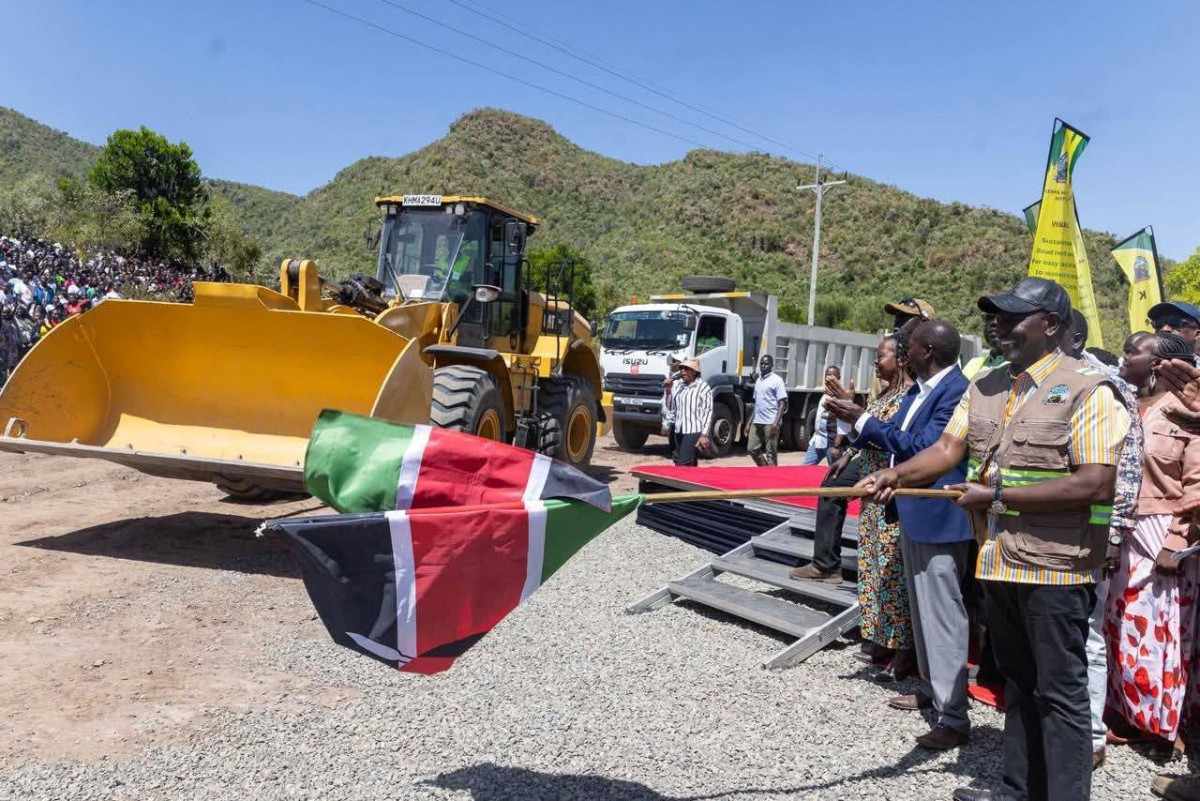
The National Treasury has allocated a combined KES 290 billion for the roads, railways, transport, and energy sectors in the FY2026/27 budget.
The allocations form part of a broader KES 4.8 trillion national budget anchored on the Bottom-Up Economic Transformation Agenda, presented to the National Assembly on June 11, 2026 by the Cabinet Secretary for the National Treasury, FCPA John Mbadi.
Roads Sector Takes Largest Share of Infrastructure’s Budget
The roads sector received the lion’s share at KES 220.4 billion. Of this amount, KES 44.3 billion will be deployed towards the construction of new roads and bridges, KES 58.0 billion towards rehabilitation, and KES 118.1 billion towards roads maintenance.
Key projects include the Nairobi–Nakuru–Mau Summit Highway, the Nairobi–Mombasa Expressway, and the Mau Summit–Eldoret–Malaba Highway, all of which support the Northern Corridor, Kenya’s primary trade route serving Uganda, Rwanda, South Sudan, and the Democratic Republic of Congo (DRC).
In the budget, the government allocated KES 38.4 billion to the railway sector, with additional transport investments targeting key bottlenecks. These include KES 400 million for the Kenya Ferry Ramp in Likoni, Mombasa; KES 1.0 billion for Public Ferry Landing Ramps at Lake Victoria covering Mbita and Sena in Homa Bay County; KES 150 million for ferry acquisition on Lake Victoria; and KES 582 million for the Nairobi Bus Rapid Transit Project.
The energy sub-sector has been allocated KES 30.9 billion: KES 7.5 billion for the National Grid System, KES 20.2 billion for Rural Electrification, and KES 3.2 billion for alternative energy technologies.
Rural electrification accounts for 65% of the energy budget, reflecting the government’s target of expanding electricity access beyond the 10.2 million customers currently connected, up from 8.9 million at the start of President William Ruto’s tenure.

On the generation front, Mr. Mbadi stated that priority investments include the High Grand Falls Hydropower Project (700 MW) and the Karura Hydropower Project (90 MW) which are projected to add 790 megawatts to the national grid, which currently stands at an installed capacity of 3,272 MW as of April 2026.
National Infrastructure Fund
Supporting the infrastructure agenda is the newly established National Infrastructure Fund (NIF), created under the National Infrastructure Fund Act 2026. The Fund is seeded with KES 106.3 billion from the March 2026 Kenya Pipeline Company IPO and an anticipated KES 204 billion from the partial divestiture of the government’s stake in Safaricom PLC to Vodacom.
The government has set a target of mobilising at least KES 70 billion in PPP investments in FY 2026/27 across energy, transport, water, housing, health, and digital infrastructure sectors.


