


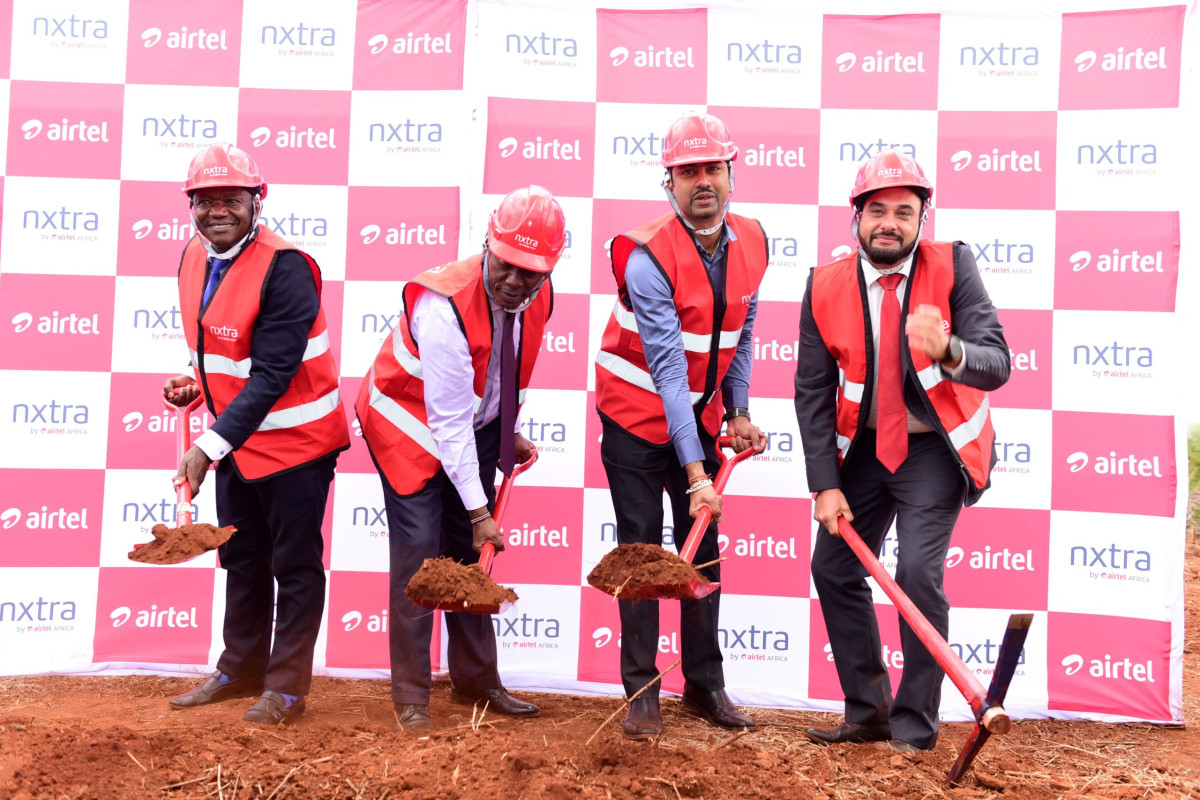
Airtel Africa is investing Sh5.68 billion ($44 million) in Tatu City to construct what is expected to become East Africa’s largest hyperscale data center. As Africa’s digital economy accelerates, the battle for technological dominance is shifting beyond mobile towers to the infrastructure that powers cloud computing, artificial intelligence (AI), enterprise storage, and broadband connectivity.
The project is being led by Airtel’s infrastructure subsidiary, Nxtra by Airtel. Airtel aims to become a major force in Africa’s rapidly evolving digital infrastructure market. Construction of the data center commenced on September 9, 2025, marking the beginning of an ambitious effort to position Kenya at the center of regional cloud and enterprise technology services.
Upon completion, the facility will deliver 44 megawatts (MW) of power capacity, ranking it among the continent’s most powerful data hubs. Hyperscale data centers of this magnitude are designed not merely for storage but to support the intensive computing demands of cloud providers, financial institutions, AI systems, streaming platforms, and multinational corporations. Airtel expects the center to be fully operational by the first quarter of 2027, equipping East Africa with one of its most advanced digital infrastructure assets.
Airtel has competed primarily in traditional telecommunications i.e. voice, data bundles, and mobile money. However, the rapid growth of enterprise cloud services and AI-driven computing has opened a new frontier where infrastructure ownership may determine long-term market leadership. By developing this facility, Airtel is diversifying beyond conventional telecom revenues and establishing a presence in high-margin enterprise and broadband services.
The project positions Airtel in direct competition with Safaricom PLC as the data center race is increasingly a contest over who will power the next generation of African businesses. Companies today require applications hosted closer to their customers to reduce latency, improve speed, and enhance reliability. Airtel’s new hub is designed to meet that demand while becoming a preferred destination for AI workloads and complex cloud environments.
Airtel Proceeds Where Others Paused
The timing of the project is significant, particularly given Kenya’s ambition to become Africa’s premier technology hub. Earlier plans for a $1 billion hyperscale project involving Microsoft faced delays, largely due to its proposed 1,000MW energy requirement, which would have placed considerable strain on the national grid. Against this backdrop, Airtel’s 44MW facility appears more practical, scalable, and immediately achievable within Kenya’s existing power infrastructure.
According to Yash Issur, the facility is expected to create new opportunities for businesses and communities across the region by providing secure, integrated, and scalable digital solutions. That promise extends beyond multinational corporations. Startups, financial technology firms, e-commerce platforms, and governments increasingly rely on local cloud infrastructure to improve efficiency and reduce dependence on overseas hosting services.

Data is becoming the backbone of commerce, finance, communication, and artificial intelligence, and the companies that control the underlying infrastructure are positioning themselves for the next era of economic influence. By choosing Kenya as the site for East Africa’s largest hyperscale facility, Airtel has signaled confidence in the country’s digital future and intensified the competition to define who will power Africa’s technological transformation.
Also read: Ethiopia Slowly Emerges as Safaricom’s Next Growth Frontier


